
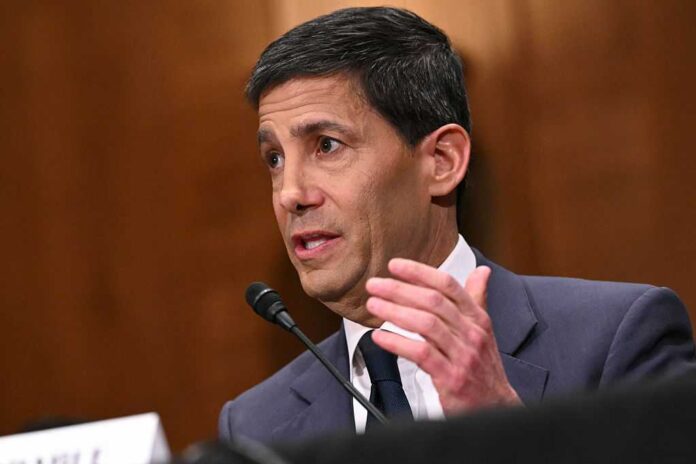
At a recent Senate hearing, Donald Trump’s pick to head the Federal Reserve, Kevin Warsh, stated his commitment to combating inflation. This comes as President Trump continues to press for interest rate reductions, which some analysts warn could exacerbate inflation issues. Warsh, a former high-ranking official at the Federal Reserve, was nominated by Trump earlier this year to succeed Jerome Powell, the current chair. Trump has been vocal in his criticism of Powell for not acting quickly enough to lower rates. Investors are keenly observing how Warsh navigates the conflicting pressures for lower interest rates amid rising gasoline prices fueled by the ongoing conflict in Iran, which is further straining inflation rates already hovering at 3.3% annually.
Higher inflation generally prompts the Federal Reserve to either raise interest rates or maintain them, making a cut unlikely. Any adjustments to the Fed’s benchmark rate directly influence mortgages, auto loans, and business borrowing. In his remarks to the Senate Banking Committee, Warsh emphasized that tackling inflation remains a primary objective.
“Congress has entrusted the Fed with ensuring price stability, without exceptions or excuses,” he stated firmly. “Inflation is a choice, and it’s the Fed’s duty to manage it.”
During an interview with CNBC, Trump was asked about his expectations for Warsh’s potential actions following confirmation, expressing disappointment if Warsh did not initiate immediate rate cuts. “I would,” Trump affirmed.
If confirmed, Warsh would face considerable challenges. The escalation of tensions in Iran is creating upward pressure on gas prices, complicating the Fed’s ability to follow through on Trump’s request for rate cuts. This conflict has the potential to not only hinder economic growth but also impact hiring rates. Additionally, if Warsh assumes the role of chair, he may still find Jerome Powell serving on the Federal Reserve’s governing board—an unusual situation not seen since the late 1940s.
Warsh, who has a substantial financial portfolio exceeding $100 million, faced tough scrutiny during the hearing, particularly from Democratic senators, who raised concerns about the transparency of his financial interests.
In his opening statement, Warsh reiterated the importance of the Federal Reserve’s independence. He noted that such independence is “essential” but should not be perceived as being threatened when elected officials express their opinions on interest rates. Trump has consistently demanded a decrease in the Fed’s key rate, which currently stands at approximately 3.6%.
Senator Elizabeth Warren from Massachusetts accused Trump not only of making comments regarding rates but also of attempting to oust a Fed governor while investigating Powell’s testimony about the Federal Reserve. She claimed Warsh shifted his stance on interest rates, supporting higher borrowing costs during his time on the Fed’s board even as economic recovery from the 2008-09 recession lagged. “The Senate should not facilitate Trump’s agenda by approving his nominee as chair,” she stated.
While the hearing is a significant step in Warsh’s nomination process, the timeline for a committee vote remains uncertain. The Justice Department is currently investigating Powell alongside the Federal Reserve regarding a renovation project, and Senate Republican Thom Tillis indicated that he would effectively block Warsh’s nomination until this investigation concludes.
Senator Tina Smith, a Democrat from Minnesota, remarked to reporters, “There’s clearly a majority of the committee that will not support this nomination, especially while this investigation is ongoing. It feels like we are merely going through the motions without addressing the core issues surrounding this nomination.”
The uncertainty surrounding the transition from Powell to Warsh could lead to an unusually tumultuous period for the Federal Reserve, an institution typically known for its seamless leadership changes. If these transitions prove particularly challenging, they could create volatility in the markets and affect long-term interest rates.
Powell’s term as chair is set to expire on May 15, and he has indicated he will remain until a successor is appointed. Additionally, Powell is completing a separate term on the Federal Reserve’s governing board that extends through January 2028. Typically, outgoing Fed chairs leave the board when their term ends, but Powell has stated his intent to stay until the investigation concludes.
In response to Powell’s comments, Trump remarked that he would dismiss Powell should he attempt to stay on at the Fed. However, Trump’s previous attempt to remove a Fed governor, Lisa Cook, remains tangled in legal challenges, with the Supreme Court appearing to favor allowing Cook to maintain her position during arguments heard in January.
Donald Trump’s nominee to lead the Federal Reserve pledged to fight inflation at a hearing Tuesday even as the president renewed his demands for interest rate cuts that could worsen it.
The comments underscore the challenges faced by Kevin Warsh, a former top Fed official whom Trump named in January to replace the current Fed chair, Jerome Powell. Trump has repeatedly attacked Powell for not cutting rates. Investors will be watching the hearing closely to see how Warsh balances Trump’s demands for lower interest rates as the war in Iran pushes up the price of gasoline, adding to inflationary pressures that already exist.
Higher inflation typically leads the Fed to raise rates, or at least keep them unchanged, rather than cut them. When the Fed changes its key rate, it can affect mortgages, auto loans, and business borrowing.
Warsh told the Senate Banking Committee that one of his top goals would be to fight inflation, which remains elevated at 3.3% annually.
“Congress tasked the Fed with the mission to ensure price stability, without excuse or equivocation, argument or anguish,” Warsh said. “Inflation is a choice, and the Fed must take responsibility for it.”
Trump was asked Tuesday in an interview on CNBC if he would be disappointed if Warsh didn’t cut rates “right away” if confirmed.
“I would,” Trump said.
Warsh would be in a tough spot if confirmed. Inflation is worsening as the Iran war has sent gas prices higher, making it much harder for the Fed to implement the interest rate cuts Trump so desperately seeks. The conflict could also slow the economy as well as hiring. And if Warsh ultimately becomes chair, he may very well find his predecessor, Jerome Powell, still sitting on the Fed’s governing board, an uncomfortable arrangement that hasn’t occurred since the late 1940s.
Warsh, a former top official at the Fed and a wealthy investor, faced a range of tough questions at the hearing. Democrats have raised the issue of what they see as a lack of transparency regarding some of his vast financial holdings, which total more than $100 million, according to a recent disclosure.
Warsh expressed support for the Federal Reserve’s independence in his opening statement.
He said such political independence is “essential,” but he also said it wasn’t threatened when “elected officials — presidents, senators, or members of the House — state their views on interest rates.” Trump has repeatedly urged Powell to cut the Fed’s key rate from its current level of about 3.6%.
Sen. Elizabeth Warren, a Massachusetts Democrat, said that Trump has not just stated opinions on rates, but has sought to fire a Fed governor and is investigating Powell for recent testimony about the Fed.
She also accused Warsh of flip-flopping on interest rates, supporting higher borrowing costs as a member of the Fed’s board of governors, despite the weak recovery from the 2008-09 Great Recession, and when Democrats were in the White House. She said he switched positions after Trump was re-elected.
“The Senate should not be aiding and abetting Donald Trump’s illegal takeover of the Fed by installing his chosen sock puppet as chair,” she said.
While the long-delayed hearing is a necessary step for Warsh, it’s not clear when the committee may even be able to vote on his nomination. The Justice Department is investigating Powell and the Fed over a building renovation, and Sen. Thom Tillis, a North Carolina Republican, has said he would effectively block Warsh until the probe is dropped.
“Clearly there’s a majority of the committee that’s not going to move this nomination forward, especially while this sham of a criminal investigation is going on,” Sen. Tina Smith, a Democrat from Minnesota, told reporters on a conference call Monday. “It feels a bit like we’re going through the motions when we really have not addressed the fundamental challenges that this nomination has.”
The turmoil could make a potential transition from Powell to Warsh an unusually turbulent one for the world’s most important central bank, which has typically seen smooth transfers of power. Should the change in leadership prove particularly bumpy, it could unnerve markets and lift longer-term interest rates.
Powell’s term as chair ends May 15. He said last month that he would remain as chair until a successor is named. Powell also is serving a separate term as a member of the Fed’s governing board that lasts until January 2028. Fed chairs typically leave the board when their terms as chair end, but Powell also said last month he would remain on the board, even if a new chair is approved, until the investigation is dropped.
When asked about Powell’s comments, Trump said he would fire Powell if he tried to stay at the Fed. Yet Trump’s previous attempt to remove a Fed governor, Lisa Cook, has been tied up in courts. During oral arguments in January, a majority of justices on the Supreme Court appeared to lean toward letting Cook keep her job.