
Officials from the state’s health department announced significant strides made on the backlog of nursing home inspections during a briefing held on Thursday. The count of pending inspections has dramatically decreased from 130 last year down to just 10, achieving this reduction in a much shorter timeframe than initially anticipated.
During the same session with the House Health Committee focused on overseeing senior living facilities, officials acknowledged the increasing difficulty in monitoring assisted living facilities. Many of these facilities operate without licenses and often remain unnoticed until a complaint is lodged.
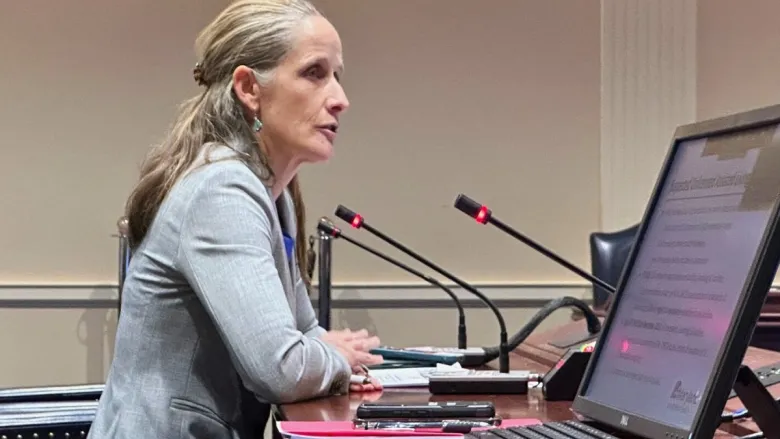
Dr. Meg Sullivan, the Deputy Secretary of Public Health, expressed that while significant improvements have taken place since a couple of years ago, especially compared to the last session, there remains much work to accomplish.
Upon taking office last year, Sullivan acknowledged that she inherited a variety of complex challenges. She stepped in for Dr. Nilesh Kalyanaraman, who had informed lawmakers previously about the backlog of 130 nursing homes awaiting their federally required annual inspections.
Kalyanaraman had indicated that the department was making progress but estimated it would take up to two years to resolve the backlog completely.
During Thursday’s briefing, Sullivan explained that the department has hired additional staff, trained existing personnel to conduct the necessary inspections, and improved the surveying process overall.
Tia Witherspoon, the executive director of the Office of Health Care Quality (OHCQ), highlighted a recurring issue inspectors have encountered while resolving the backlog: the apparent poor condition of many facilities. She noted, “These buildings often require substantial renovations. Unfortunately, it takes significant resources to address these repairs, so only limited work can be done.”
In the meantime, the oversight of assisted living programs has emerged as a pressing concern for Maryland. Assisted living facilities serve as supportive environments for seniors who require help with daily activities but do not need the extensive medical care provided in nursing homes.
Unlike nursing homes, assisted living facilities are not subject to mandatory federal inspections, contributing to the difficulty state officials face in effectively monitoring them. There remains a substantial number of facilities operating without licenses, leaving them off the state’s radar until a complaint arises.
Currently, there are 1,617 licensed assisted living facilities in Maryland that are inspected on a regular schedule. While officials can investigate unlicensed facilities, they can only do so when complaints are received by the OHCQ.
“Since unlicensed facilities are not registered with the state, the only way we can look into them is based on the information we are given,” Sullivan explained.
The circumstances are further complicated by the reality that many unlicensed facilities may not have ill intentions; rather, they might be small operators unaware that they are required to register. On average, the agency receives about 8-10 complaints each month related to unlicensed facilities, which is a small fraction of the over 1,000 complaints it processes monthly.
From July to December of last year, the state cited 10 unlicensed assisted living facilities, with signs of abuse or neglect found in just two of those cases, which were subsequently referred to the attorney general. Over the course of fiscal year 2025, violations were recorded for 13 unlicensed facilities, but none indicated any abuse or neglect.
“Our main focus is to increase the number of licensed assisted living programs to safely meet the needs of Maryland’s residents,” Sullivan affirmed to the lawmakers. She emphasized the need for enhanced interagency collaboration to simplify processes, respond to citizens’ needs, and work comprehensively to address the overall requirement for sufficient safe and affordable facilities and services for the aging population in Maryland.
Advocates for seniors in the state have raised concerns about the well-being of one of Maryland’s most vulnerable demographics, particularly regarding the care being provided in unlicensed facilities.
Danna Kauffman, representing Lifespan Network, a senior care provider organization, informed lawmakers of a growing “senior housing crisis” in Maryland. She underscored that the issue of affordable care must be factored into discussions about unlicensed assisted living facilities.
“We have increasing concerns regarding the state’s capacity to have sufficient providers available to deliver necessary care within the community,” Kauffman stated. “There simply aren’t enough affordable housing options for seniors, especially those with low incomes.
“While it is challenging to acknowledge, it is important to remember that just because a facility is unlicensed, it does not automatically mean it is offering substandard care,” Kauffman elaborated. “Many operators may simply be unaware of licensing requirements, caring for just a couple of residents, often based on referrals from friends, churches, or community members.”
After the meeting, Nancy Carr, communications director for AARP Maryland, acknowledged that some operators might have good intentions but emphasized the need for seniors to receive appropriate care.
Sara Westrick, AARP Maryland’s advocacy director, echoed this sentiment, pointing out, “This is a crucial issue. This is not a business one should undertake lightly.”