
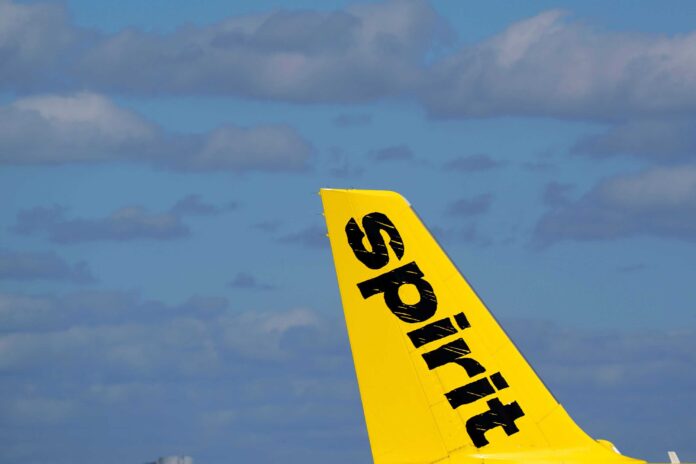
Chris Dell was taken by surprise last Saturday when she discovered that Spirit Airlines, the carrier she had booked for an upcoming cruise with her two daughters, had abruptly ceased operations. She quickly made her way to Hartsfield-Jackson Atlanta International Airport, seeking alternative flights. Unfortunately, without a refund for her Spirit tickets, Dell found herself facing more unexpected expenses. “When I called Spirit’s customer service, the line just hangs up—you can’t reach anyone,” she stated. “I’m upset. I’ve already put down money for the cruise, and I can’t just let that go to waste. Plus, driving to Miami is a ten-hour journey, and it’s just me and my kids. We chose to fly for a reason.”
Dell’s experience is emblematic of the frustration felt by thousands of Spirit Airlines customers forced to adjust their travel plans or left stranded as the budget airline shut down globally. This marks the first time in 25 years that a major U.S. airline has gone out of business due to financial difficulties. The airline’s downfall comes on the heels of its second bankruptcy, a situation exacerbated by years of struggles and a failed last-minute rescue agreement with the Trump administration.
The impact of Spirit’s closure has been rapid and extensive. All flights have been canceled, customer service operations halted, and customers were advised not to go to the airport.
Here’s everything you need to know about Spirit’s shutdown:
Why did Spirit Airlines shut down?
The airline filed for Chapter 11 bankruptcy on two occasions in the past two years, with the most recent filing occurring in August. However, its financial woes can be traced back to the Covid-19 pandemic; since then, Spirit has struggled to maintain profitability and has consistently expressed “substantial doubt” about its ability to remain operational.
In February, the airline announced it had reached an agreement with creditors to emerge from its latest bankruptcy and continue flying. Just three days later, however, the conflict in Iran led to a spike in jet fuel prices, further stressing the airline’s finances. Jet fuel is, after labor, the second-largest expense for airlines. Larger companies have managed to weather these increases by raising fees and prices, but budget airlines like Spirit suffer when forced to raise their ultra-low fares.
Despite some progress towards recovery, an attorney representing Spirit indicated in bankruptcy court that the airline was engaged in “very advanced discussions” for a rescue package with the Trump administration. Yet, a key group of creditors rejected this plan, which would have given the government control over the majority of Spirit’s shares. The backlash from the airline industry and Congressional Republicans contributed to the plan’s failure. President Trump indicated his support last week but conceded that a deal might not materialize.
What should you do if you booked a Spirit flight?
The shutdown impacts roughly 300 flights and 60,000 passengers daily over the next month. Those currently in transit must find alternate flights on other airlines, likely facing inflated prices as they scramble for last-minute tickets. Spirit has announced that it cannot assist with rebooking flights to different airlines.
However, several other airlines are stepping in to assist affected travelers. United Airlines, Delta Air Lines, JetBlue Airways, and Southwest Airlines are temporarily capping fares for Spirit passengers, with one-way tickets expected to cost around $200, according to U.S. Transportation Secretary Sean Duffy. Passengers will need to present a Spirit confirmation number and proof of payment to access these fares, which will have limited availability.
Additionally, American Airlines and Delta are offering lower fares on popular Spirit routes, while Allegiant Air has frozen prices on corresponding routes. Frontier Airlines is also providing a 50% discount on base fares until May 10. The U.S. Department of Transportation has advised travelers to check with other airlines to confirm if they will accept Spirit tickets on either a confirmed or standby basis or if they will offer discounts by waiving certain restrictions.
Katy Nastro, a travel expert with Going.com, referred to these offers as “rescue fares” that may be subject to limitations. She urged travelers to rebook with these carriers as soon as possible.
How do you get a refund?
In a statement to customers, Spirit Airlines confirmed that it would automatically issue refunds to passengers who booked tickets with a credit or debit card. For those who made reservations through travel agents, Spirit advises contacting the agent directly for refund requests.
As part of an effort coordinated by the federal government and airlines to assist stranded travelers and the Spirit workforce, Duffy outlined a combination of capped ticket prices, discounted rebooking options, and support measures for employees. He reminded customers that Spirit would provide automatic refunds and suggested that passengers contemplate chargebacks, travel insurance claims, or bankruptcy filings as additional options for recovering funds.
However, customers who booked flights using other payment methods, including vouchers, credits, or Free Spirit points, may not be able to recover their money. Companies that go out of business typically discontinue honoring rewards, coupons, and vouchers after ceasing operations. Spirit stated that the possibility of refunds for these payment methods would be determined in the company’s bankruptcy proceedings.
What happens to their employees?
The airline’s decision has abruptly left 17,000 workers without jobs, comprising 14,000 Spirit employees and thousands of contractors reliant on the airline. Alarmingly, the staff received notification of their job losses just an hour before the official shutdown announcement.
The leadership of the Association of Flight Attendants informed union members around 1 a.m. ET, stating, “We are delivering the hardest news of our lives that Spirit will permanently cease operations at 3:00 AM Eastern Time on May 2.” Flight attendants are being sent home or back to their bases, with their flights and hotel accommodations covered, according to the union.
Duffy also noted that major airlines are extending travel privileges to Spirit employees and establishing hiring pathways, including dedicated job portals with American and United Airlines. “Most major U.S. carriers are offering travel pass benefits and extra jump seats to Spirit pilots, flight attendants, and other staff needing to return home,” a Department of Transportation release mentioned. Offers for preferential employment interviews are also available for Spirit team members.
Will this cause an increase in other airline prices going forward?
This summer, Spirit accounted for 2% of all scheduled domestic flights in the U.S., and its closure will likely create upward pressure on fares throughout the industry. Spirit’s economy model compelled larger airlines to match its low rates to attract customers, but now that it has exited the market, there is less incentive for other carriers to maintain competitive pricing. According to Richard Quest, CNN Business’ editor-at-large, “They were a drain on the industry, making it unprofitable for some other airlines such as JetBlue — who now, because Spirit has gone, arguably can put themselves in a marginally better position.”
Nevertheless, the vulnerabilities of other low-cost airlines may have been exposed, especially in light of rising fuel prices due to the conflict in Iran. Consolidation in the industry appears inevitable as airlines reassess their cost structures, reinforcing Quest’s assertion. Zach Griff, author of the airline newsletter From the Tray Table, echoed concerns about potential fare hikes, noting, “If you remove low-cost competition from the equation, then, yes, United and similar airlines could maintain these higher fares for a considerable length of time.”
CNN’s Chris Isidore, Marnie Hunter, Rafael Romo, Gloria Pazmino, and Maria Sole Campinoti contributed to this report.