
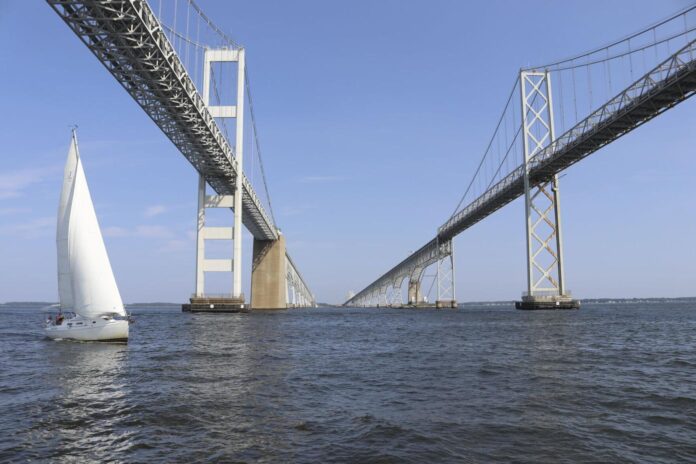
For over three hundred years, Maryland’s Eastern Shore has been characterized by its picturesque farms, serene waterways, and quaint towns. However, a proposed new Bay Bridge could significantly alter this landscape—unless state officials implement a thorough land-use strategy to safeguard the Shore’s unique charm.
Stretching from Cecil County to Somerset County, the Eastern Shore’s vibrant farms, lush forests, and winding creeks have historically supported local watermen who harvest oysters, crabs, and fish. The towns are still centered around welcoming front porches, iconic church steeples, and bustling Main Streets. The expansive skies are filled with migrating geese each season. It’s hard to argue against the importance of preserving this beautiful landscape and the culture it nurtures.
Despite this, the Maryland Transportation Authority (MDTA) is advancing plans for a larger Bay Bridge span along the same route as the existing crossing. This would mark the largest infrastructure project in the state’s history, yet the planning process by the MDTA is fundamentally flawed.
A major oversight is the lack of a comprehensive strategy to manage the growth that will inevitably follow the bridge’s construction.
One glaring issue is the absence of planning for the disruptive, years-long highway expansions and interchange constructions needed along the US Route 50/301 Corridor, stretching from Queenstown to Cambridge.
In an attempt to ease summer traffic congestion (which could be addressed through alternative methods), MDTA’s plans have merely shifted the bottlenecks further down the road. The current proposal will leave Kent Island and the Route 50 corridor engulfed in construction zones for years, adversely impacting local residents and businesses.
However, the most significant flaw in MDTA’s plans is its failure to consider the substantial wave of development that will follow the new bridge.
Just as the original span opened the Eastern Shore to development in 1952, and the second span led to rampant growth on Kent Island, a new eight-lane Bay Bridge will likely trigger an influx of people and construction. This could result in the replacement of farms with housing developments, increased pollution in waterways from new wastewater, and overwhelming traffic in small towns and rural roads that were never designed for such high volumes.
With the new bridge, the Eastern Shore risks losing its unique identity, becoming just another sprawling suburb.
It doesn’t have to be this way. If Maryland genuinely requires a new multi-billion-dollar bridge to the Eastern Shore, it must also establish a multi-million-dollar land preservation initiative for the region. This type of planning and execution is beyond the scope of the MDTA, which focuses on transportation infrastructure rather than preserving cultural landscapes.
Maryland’s leadership should send the MDTA back to reconsider its plans—not in isolation, but in collaboration with state agencies such as the Departments of Agriculture, Environment, Planning, Natural Resources, and Commerce, as well as local counties and municipalities, and private and nonprofit organizations that represent the interests of those affected by the potential suburbanization of the Eastern Shore.
This collaborative effort should be as ambitious and comprehensive as Maryland’s Critical Area Act of 1984, which successfully addressed shoreline degradation around the Chesapeake Bay. Protecting the Shore from the sprawl that could result from the new bridge will require similar cooperation among state agencies responsible for agriculture, environment, planning, natural resources, and commerce, alongside local governments and private stakeholders.
Marylanders who care about the future of the Eastern Shore are encouraged to review and provide feedback on the draft environmental impact statement before the March 9 deadline at info@baycrossingstudy.com.
If the state decides to construct a new bridge, it must also create a plan to protect the Shore. Anything less would be an irreversible risk.