
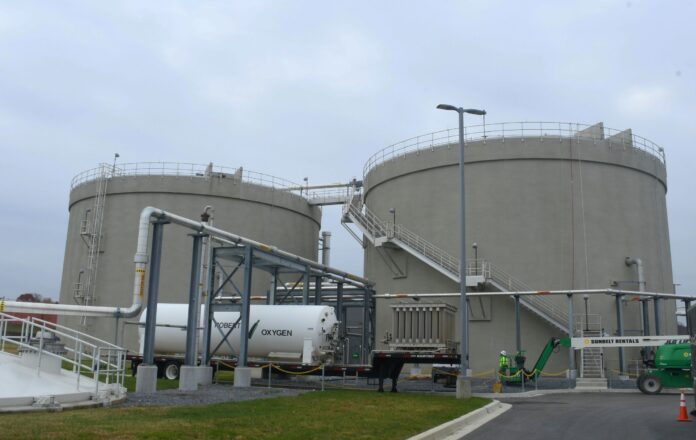
Every day, residents across Montgomery County and Prince George’s County contribute to an unexpected source of clean energy—simply by using their toilets. Through a regional wastewater recycling initiative, what was once considered waste is now helping reduce greenhouse gas emissions and power public transportation in the national capital region.
At the center of this effort is the Washington Suburban Sanitary Commission (WSSC Water) Piscataway Bioenergy Facility, located in Accokeek. This advanced facility converts biosolids—the organic material left after wastewater treatment—into renewable natural gas, a cleaner energy source that helps fuel Montgomery County’s public bus system.
From Wastewater to Renewable Fuel
The Piscataway facility uses a process called anaerobic digestion, which breaks down organic material without oxygen. During this process, methane gas is captured and purified into renewable natural gas, preventing it from escaping into the atmosphere as a harmful greenhouse gas.
Instead of allowing methane to contribute to climate change, the facility transforms it into useful energy that can power vehicles, heat buildings, and reduce reliance on fossil fuels.
This approach supports cleaner air and aligns with Montgomery County’s broader sustainability goals, including efforts to modernize its public transit fleet and reduce emissions.
Supporting Montgomery County’s Ride On Bus System
Renewable natural gas produced from wastewater plays an important role in powering parts of the Montgomery County Ride On bus fleet. By using locally produced renewable fuel, the county reduces its carbon footprint while stabilizing long-term fuel costs.
County officials have identified renewable natural gas as a key transitional step toward achieving a fully zero-emissions transit system in the future. While Montgomery County plans to expand electric bus adoption, renewable natural gas continues to provide immediate environmental benefits by replacing conventional fossil fuels.
Environmental Benefits for Local Communities
Capturing methane from wastewater offers several important advantages for Montgomery County residents:
-
Reduces greenhouse gas emissions: Methane is far more potent than carbon dioxide in trapping heat, making its capture critical for climate protection.
-
Improves regional air quality: Cleaner fuel means fewer harmful emissions from public transit.
-
Creates renewable energy locally: Energy produced within the region reduces dependence on outside fossil fuel sources.
-
Supports a circular economy: Waste materials are reused instead of discarded.
This process also helps keep organic waste out of landfills, where it would otherwise release methane into the atmosphere.
Part of Maryland’s Long-Term Climate Strategy
Maryland has established ambitious goals to reduce emissions and transition toward cleaner energy sources. Projects like the Piscataway Bioenergy Facility help support those goals by turning everyday waste into renewable energy.
Facilities using anaerobic digestion also produce treated biosolids that can be safely reused for agricultural and landscaping purposes, further reducing environmental impact.
A Growing Trend in Clean Energy and Waste Recycling
Across the United States, wastewater treatment plants are increasingly adopting anaerobic digestion to capture methane and convert it into energy. However, only a small percentage currently upgrade that gas into renewable natural gas suitable for vehicles and pipelines.
Montgomery County’s participation in this technology places the region among forward-thinking communities investing in sustainable infrastructure that benefits both residents and the environment.
Why This Matters to Montgomery County Residents
Everyday activities—from taking showers to washing dishes—contribute to a system that now helps power public transportation and reduce emissions locally.
By investing in renewable energy solutions like wastewater-to-fuel conversion, Montgomery County continues to strengthen its commitment to environmental sustainability, cleaner air, and long-term energy independence.