
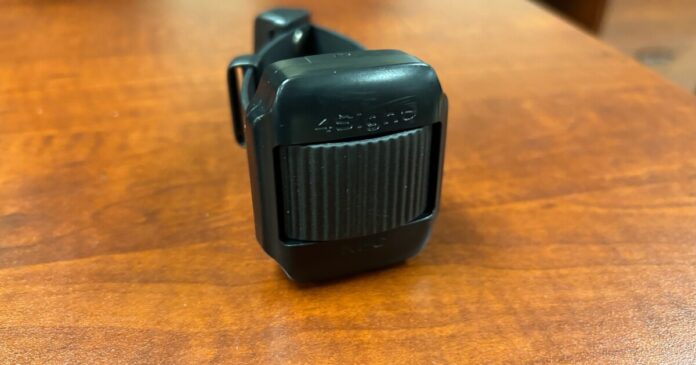
Inmates at the Harford County Detention Center, donning what appear to be oversized wristbands, are not making any fashion choices.
These devices enable corrections officers to continuously monitor their heart rates, oxygen levels, and temperature, ready to respond to any health emergencies.
“We have just 15 staff members overseeing a facility that houses 380 inmates,” explained IPC Watch Commander Lt. Christopher Rosette. “Many of them include IV drug users and individuals with poor health. When they arrive, I say, ‘Hey, this is an opportunity for you to join us in a program that aims to ensure your well-being.’”
The innovative wristbands have been operational at the detention center for under five months, yet their impact has already been significant.
In one notable case, an alert was triggered by an inmate experiencing a severe drop in oxygen saturation.
“Deputies quickly located the inmate, who was unresponsive in his cell,” stated Warden Daniel Galbraith. “Thanks to the prompt alert from the wristband, our staff was able to initiate medical assistance within moments.”
Additionally, another detainee’s alert revealed an undiagnosed heart condition, and just this week, a similar situation arose where a cellmate’s intervention likely saved a life.
A 70-year-old man suffered a cardiac event; he had initially chosen not to wear the wristband upon his arrival. Harford County Sheriff Jeffrey Gahler emphasized that participation is voluntary, saying, “We cannot compel them to wear it, but I am curious to see if he changes his mind when he returns.”
Currently, the detention center has 30 of these wristbands available for use by inmates, particularly during their initial days when they are most vulnerable.
“If something were to happen, we don’t want to be caught unprepared,” Rosette remarked. “Our goal is to assist, not just to oversee incarceration. We genuinely want to help individuals.”
The entire program, which includes monitoring and data management, costs the facility $100,000 annually.