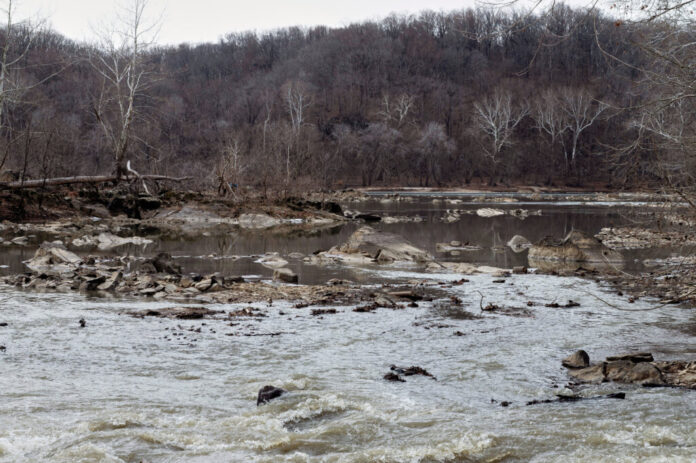
Concerns are emerging regarding whether Washington, D.C., is minimizing the health hazards and ongoing environmental damage caused by a broken sewage pipeline, which has released millions of gallons of wastewater into the Potomac River.
D.C. Water has announced that new high-capacity bypass pumps are scheduled to arrive this Friday at the location of last month’s sewer pipe failure, which has discharged millions of gallons of untreated sewage into the Potomac.
However, there are growing doubts about whether the public is adequately informed about the associated health risks and the lasting environmental effects.
In an open letter released this week, D.C. Water CEO David Gaddis committed to making every effort to restore the Potomac following the sewer pipe rupture that occurred on January 17. This ruptured pipe, a 72-inch diameter sewer line known as the Potomac Interceptor, has raised significant concerns.
However, data from researchers indicates that the D.C. government may be underreporting the spill’s dangers, according to an environmental advocate from the Potomac Riverkeeper nonprofit.
Researchers from the University of Maryland have been monitoring the water weekly since January 21.
“Even as recently as last week, we found E. coli levels 4,000 times higher than the recreational water quality standards,” stated Rachel Rosenberg Goldstein, a professor in the University of Maryland’s Department of Global, Environmental and Occupational Health.
Goldstein also reported the presence of Staphylococcus aureus, including an antibiotic-resistant strain known as MRSA. “These findings represent a significant health threat to humans,” she mentioned to WTOP’s Nick Iannelli.
“It’s critical for public health because individuals who come into contact with the water, or even the land affected by it, could be at an increased risk of bacterial infections,” Goldstein added.
While the recent cold snap has temporarily limited the risks, a shift to warmer weather could potentially worsen the situation.
“Bacteria can thrive in a variety of environments,” Goldstein explained. “Wastewater sewage creates a particularly conducive environment for bacterial growth. As temperatures begin to rise and the snow melts, monitoring water quality over time will be essential.”
Potomac Riverkeeper Organization Criticizes Response
According to Dean Naujoks from Potomac Riverkeeper, the severity of the public health and environmental risks is being downplayed. This organization is part of a nonprofit network focused on ensuring the public’s right to clean and safe water in the Potomac and Shenandoah watersheds.
“Everyone keeps relying on D.C. Water to handle this situation, which could prove to be a serious mistake,” expressed Naujoks. He accused the utility of downplaying the threats and miscalculating early E. coli data, which he states were actually 100 times higher than what was initially reported.
Naujoks criticized both local and federal governments for failing to provide essential leadership in raising public awareness about the issue.
“D.C. is essentially standing by without taking action,” he stated.
Naujoks highlighted that the Environmental Protection Agency and the D.C. Office of Energy and the Environment have regulatory authority over D.C. Water, which he believes should not be the case, as they are the agency responsible for one of the largest sewage spills in U.S. history.
“D.C. Water should not be the one assessing the situation since they have a vested interest in ensuring the public believes the water is safe,” he pointed out.
Looking ahead, he suggested that if there is any hope of restoring public confidence in the Potomac, particularly among crew teams and sailing clubs, there must be thorough data collection, continuous sampling, and, importantly, D.C. funding these initiatives.
On Thursday, D.C.’s Department of Energy and Environment issued its most robust advisory yet: “Residents and pets should avoid contact with the Potomac River and refrain from all recreational activities, including fishing. The drinking water in D.C. remains safe and unaffected.”
Furthermore, the agency confirmed it is “conducting contamination tests at three sites in the Potomac River and three sites in the Anacostia River. Additionally, D.C. Water is monitoring five other locations. The DOEE’s testing will continue weekly, and results will be made publicly accessible.”