
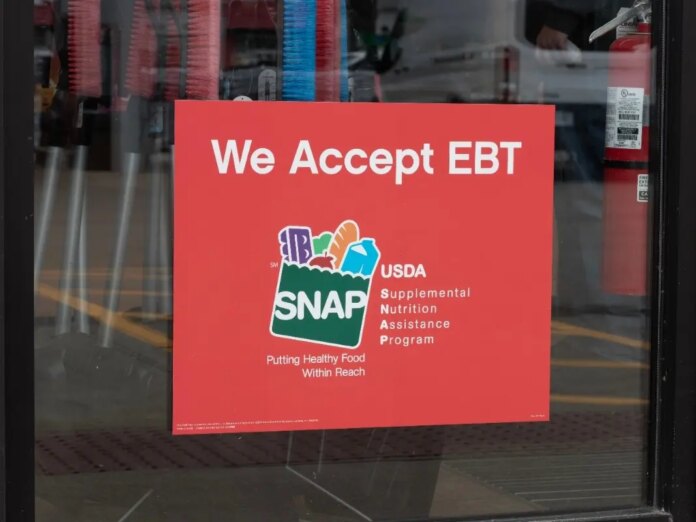
This week, new federal work requirements for the Supplemental Nutrition Assistance Program (SNAP) have come into effect, impacting hundreds of thousands of residents in Maryland.
The updated regulations remove exemptions previously granted to military veterans, individuals facing homelessness, and young adults transitioning out of foster care. Additionally, these changes make it more challenging for states to circumvent federal work requirements.
According to the Congressional Budget Office, these new stipulations are projected to reduce the number of SNAP recipients by approximately 2.4 million over the next decade.
In Maryland, over 690,000 residents depend on SNAP to fulfill their essential nutritional needs, as reported by the U.S. Department of Agriculture. An analysis from the Center on Budget and Policy Priorities indicates that 59% of SNAP recipients are families with children, while 32% are households with older adults or individuals with disabilities.
The average monthly benefit from this program, once known as “food stamps,” is around $180 per person. Recipients can utilize these funds to purchase a variety of grocery items. However, SNAP benefits cannot be used for alcohol, tobacco, or non-food items such as pet supplies or cleaning products.
The Trump administration has argued that SNAP has become excessively expansive, claiming that dependency on the program and instances of fraud have necessitated intervention from lawmakers.
With the new regulations, Maryland will also be responsible for covering 75% of SNAP’s administrative expenses and up to 15% of benefit costs, as stated by the state Department of Human Services. This change is expected to place a financial burden of approximately $412.5 million on Maryland taxpayers, an increase of over $300 million from the current state contribution.
During a virtual joint meeting of the Senate Finance and House Health and Government Operations committees this week, Maryland legislators were informed once again that the modifications to SNAP and Medicaid will cost the state millions to implement.
Finance Chair Pamela Beidle (D-Anne Arundel) characterized the updates as “a lot of doom and gloom.”
“We are facing significant challenges this year,” she remarked.
Traditionally, the federal government has covered all SNAP benefit costs and shared administrative expenses with the states.
However, under HR 1, states will be required to contribute 75% of administrative costs starting next year. For Maryland, which currently allocates $115 million for its share of SNAP administration, this translates to an additional $57.5 million annually, resulting in a total of $172.5 million each year just to manage the program.
Moreover, Maryland may need to fund a portion of the benefits due to a new penalty imposed on states with a high “payment error rate.” This rate reflects instances where benefits were overpaid or underpaid due to administrative errors, rather than fraudulent activities by recipients.
According to HR 1, states with an error rate exceeding 6% will have to contribute state funds to support SNAP benefits. Maryland’s current error rate stands at 13.64%, one of the highest in the nation. At this rate, the state would be expected to cover 15% of the $1.6 billion needed for SNAP benefits in Maryland—an additional $240 million compared to its current expenses.
“This isn’t about fraud; it’s a bureaucratic issue,” explained Webster Ye, chief of staff for the Human Services Department. “It pertains to overpayments and underpayments resulting from mistakes made by our agency and administrative staff.”
Maryland’s error rate surged to 35.56% in 2022, which Ye attributed to increased usage during the COVID-19 pandemic and high turnover within the department, leading to inadequately trained new staff. Prior to the pandemic, the error rate was below 10%.
The Department of Human Services is actively working to reduce the error rate by hiring more personnel, enhancing training for program administration, improving technical processes, and streamlining the application and renewal procedures.
“This is encouraging news,” stated Del. Kathy Szeliga (R-Baltimore County), who initially inquired whether the error rate included instances of benefit theft. “Clearly, reducing that error rate would result in significant savings for the state and taxpayers.”
Maryland Matters contributed to this report.