
Mileah Kromer, the director of the Institute of Politics at the University of Maryland, Baltimore County, stated, “There are some issues that just really catch fire.”
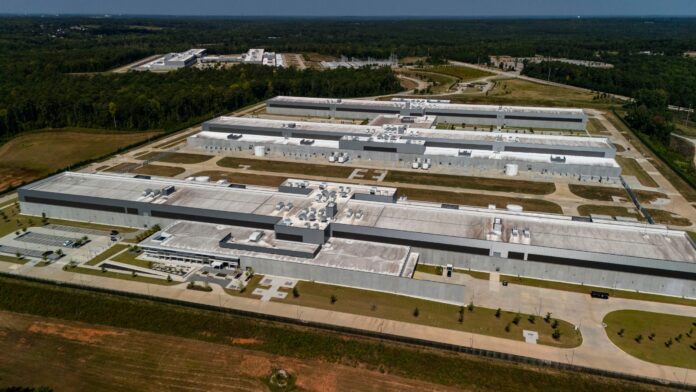
One of those contentious topics is whether Maryland should permit the construction of new data centers across the state.
Recent polling conducted by UMBC reveals that a substantial 78% of likely voters surveyed are against building new data centers anywhere in Maryland. When respondents were asked about their opinions on data centers being established in their own communities, 77% expressed opposition.
Kromer was notably impressed by the results, emphasizing that this opposition goes beyond a typical NIMBY mentality, or “not in my backyard” attitude.
“There is effectively no difference” in the responses whether Marylanders were asked about data centers located nearby or elsewhere in the state, as resistance remained consistently high in both scenarios.
Even when considering potential advantages such as job creation and increased tax revenues, Kromer pointed out that survey participants view data centers negatively. A notable 49% of individuals believe that data centers would primarily have adverse effects, while 37% perceive negative consequences related to job opportunities. Only 26% see a net positive impact for the state from these facilities.
A significant concern among respondents is the perceived financial burden on their households. For instance, when it comes to energy costs, a staggering 80% of those surveyed anticipate a negative impact.
Additionally, 94% of participants identified the high prices of everyday goods and services as a primary concern.
“It’s hardly surprising that Marylanders are disinterested in anything that could potentially drive up their electric bills or other household expenses,” Kromer remarked.
This unanimous opposition to new data centers appears to be one issue where Marylanders, regardless of political affiliation, economic background, or geographic location, find common ground.
In light of these sentiments, Governor Wes Moore, who had initially embraced the development of data centers as a means to stimulate the state’s economy, recently announced plans to establish a task force to study their potential impacts. Although he did not advocate for halting their development, local jurisdictions such as Prince George’s and Montgomery counties have opted to pause these projects.
On another technology-related matter, residents of Maryland expressed their views on artificial intelligence, with only 23% believing it will have a positive impact on society, while a significant 67% foresee negative ramifications.
The Mood of Marylanders
When asked whether they feel Maryland is moving “in the right direction,” 49% of voters indicated that they believe it is on the wrong track, while only 37% felt optimistic about the state’s trajectory.
Among Democrats, half expressed a positive outlook, whereas merely 7% of Republicans shared the same sentiment. Among those who are unaffiliated, 35% felt that things are headed in the right direction.
Addressing financial matters, a striking 81% of respondents described the economic conditions over the past year as poor or fair, contrasted with just 17% who rated them as excellent or good.
When asked about their predictions for the future, 43% of those surveyed fear that conditions will worsen in the coming year.
Despite the grim outlook regarding the economy and individual financial situations, respondents assigned Governor Moore a comparatively favorable approval rating of 49%, with 42% expressing disapproval. These figures largely reflect party lines, as 70% of Democrats view Moore positively, while only 7% of Republicans agree.
When questioned about the apparent contradiction of Moore’s approval rating in light of economic concerns, Kromer noted the complexity of the issue.
“I can’t definitively answer that from our survey because we did not pose that specific question,” she explained. “However, on the whole, individual states have limited control over the pricing of everyday commodities and services. He is a Democratic governor presiding over a predominantly Democratic state. While economic perspectives could certainly be more favorable, he still manages to maintain a 49% approval rating.”
The poll surveyed 776 likely voters in Maryland from September 22 to September 27, with a margin of error of plus or minus 3.5%.
Stay updated with breaking news and daily headlines delivered to your inbox by signing up here.
© 2026 WTOP. All Rights Reserved. This website is not intended for users located within the European Economic Area.