
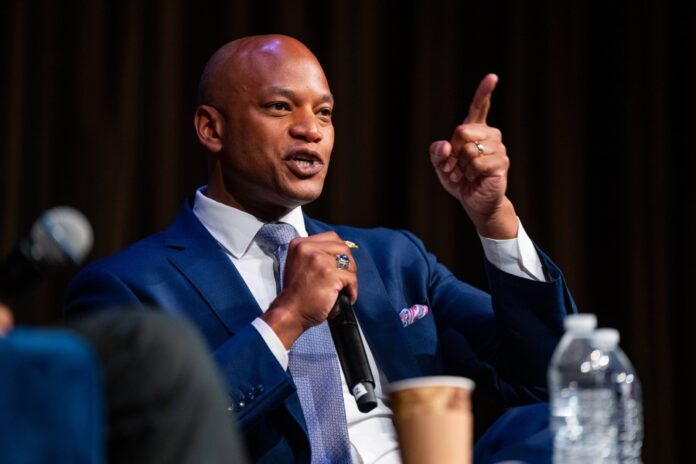
As Maryland approaches the crucial midterm elections set for November, discussions surrounding key political issues are intensifying.
Democratic Governor Wes Moore recently engaged in a conversation with Anne Kramer and Shawn Anderson from WTOP, delving into topics such as election integrity, increasing utility costs, the role of data centers, and more.
Listeners can also tune in to hear his discussion with his challenger, Dan Cox here.
Md. Gov. Wes Moore on the upcoming November election
3:40
|
2026-09-01
This transcript has been lightly edited for clarity.
Q: Regarding the ongoing legal debates around redistricting, some judges have noted that the deadline for finalizing the ballot question for the upcoming election has passed. One judge agreed with Republican critics that the ballot question is misleading. As appeals are being processed, why do you believe it is essential for Maryland to maintain the ability to redraw congressional districts, potentially ensuring a Democratic majority?
Moore: It’s crucial that this power resides with the people. Our democracy should be determined by the citizens. I have consistently advocated for this, especially as I have observed what I consider an assault on our democracy and freedoms emanating from the White House. The President has attempted to nationalize elections, which I see as unconstitutional, and has suggested eliminating mail-in balloting, alongside proposals that would intimidate voters by surrounding ballot boxes with federal agents. Additionally, there’s a distinct disparity in how he advises Republican and Democratic states regarding redistricting. I cannot condone these actions occurring openly. Ultimately, this matter should be placed before the people of Maryland to decide our democratic future—not determined by Donald Trump.
Q: On the subject of mail-in ballots, can you elaborate on your primary concerns regarding President Trump’s stance, especially since Maryland has joined other Democratic states in suing the federal government?
Moore: Indeed, we have previously taken legal action against him and succeeded in court. I am confident we will prevail again. This is just another tactic by him to manipulate not only the November elections but those beyond. It’s important to note, as the chair of the Democratic Governors Association, I represent both Democratic and Republican governors who share similar concerns. The Constitution grants states the authority to oversee elections; the federal government does not have jurisdiction here, which is why I firmly believe the President’s actions are not only unwise but unlawful.
Q: Utility rates are a pressing issue for many Maryland residents. Last week, the Maryland Public Service Commission denied Pepco’s requested rate increase. As you have been advocating for keeping Marylanders’ utility bills manageable, what alternative measures are you considering to control these rates?
Moore: I appreciate the PSC’s decision, which reflects its independence and responsibility. Pepco, like other energy companies, is financially stable. However, we know that regular citizens across the state are not faring as well, grappling with rising inflation and surging energy costs as a consequence of recent policies. Our focus must be on holding large corporations accountable. Here in Maryland, for example, I have signed legislation to combat price gouging in supermarkets and curb discriminatory pricing practices that exploit consumer data. Furthermore, we are committed to implementing tax relief measures designed to ease the financial burden on middle-class families, helping them manage their utility expenses during this challenging economic period.
Q: The debate over data centers is gaining momentum across Maryland. While Democratic leaders have, in the past, supported their development, perspectives are changing. What do you attribute this shift to, and what is your stance on data centers?
Moore: I have made my position clear since the beginning of this year during my State of the State address. For any data center project to proceed in Maryland, it is imperative that they prioritize hiring local workers and engaging with the community, granting local governments a pivotal role in decision-making. They must provide their own power supply without causing environmental harm to our air or water. While some localities may welcome such developments, it is essential that they have the final say and that strict guidelines are established to ensure responsible practices. I appreciate that increasing numbers of people are recognizing the importance of these criteria, allowing us to set a more equitable framework that serves our constituents rather than corporate interests.
Q: Since last month’s decision by a federal judge to relocate the FBI headquarters back to Greenbelt, Maryland, what are the next steps? Should we expect construction to commence soon, or will you be waiting for potential appeals from the federal government?
Moore: I anticipate that the federal government may seek to appeal this ruling. However, the judge’s decision was a validation of what we knew: that Maryland won this competitive selection process after a decade-long effort. We presented strong indicators, highlighting our accessibility to public transportation and the availability of secure facilities that align with various cybersecurity assets in the area. The new FBI headquarters, which will create thousands of jobs and stimulate economic growth, rightly belongs in Maryland, specifically in Prince George’s County. We are eager to move forward and begin construction as soon as possible.
WTOP’s Shawn Anderson and Anne Kramer speak with Md. Gov. Wes Moore about data centers, FBI headquarters
2:58
|
2026-09-01
Stay updated with breaking news and daily updates by subscribing to our email newsletter here.
© 2026 WTOP. All Rights Reserved. This website is not intended for users located within the European Economic Area.