
In Maryland’s public schools, students might soon face a complete ban on cell phone usage from the first bell until the last, a measure set to take effect at the start of the 2027-28 school year. This proposal is currently making its way through the General Assembly.
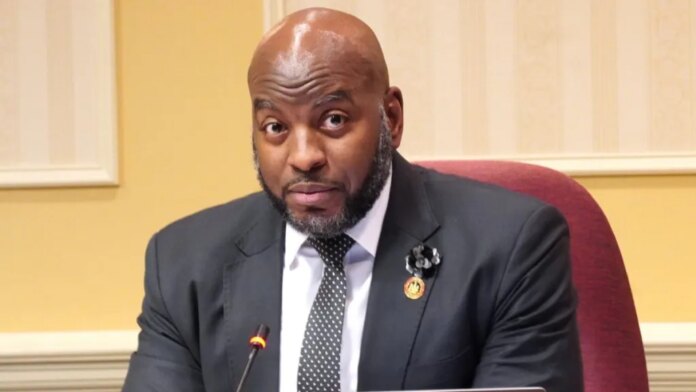
This week, the Senate unanimously passed Senate Bill 928, introduced by Sen. Kevin Harris (D-Prince George’s, Charles and Calvert). The House followed suit on Monday, voting 135-1 in favor of Del. Adrian Boafo’s (D-Prince George’s) Bill 525, with Del. Robin Grammer Jr. (R-Baltimore County) being the only dissenting vote.
During a recent interview, Sen. Harris reflected on his school days, recalling how school leaders would contact parents in case of emergencies.
“We need to return to that approach,” he stated. “However, the key focus should be on maximizing instructional time and enhancing student attentiveness. I believe it’s crucial for our young people to concentrate better from bell to bell.”
The House Ways and Means Committee has slated a hearing for April 1 regarding Harris’ bill. Meanwhile, Del. Boafo’s bill has been assigned to the Senate Education, Energy and the Environment Committee, though a hearing date is yet to be established.
Notably, these bills aim not only to limit cell phone usage during instructional periods but also during lunch, recess, and transitions between classes. Students would be required to store their electronic devices, though the specific storage methods would be determined by local school boards.
School administrators would retain the authority to permit the use of personal electronic devices for educational purposes if a school-issued device is unavailable. Exceptions would also apply for students who need to address caregiving responsibilities or manage documented health issues.
Moreover, students with Individualized Education Programs (IEPs) would be able to use electronic devices as part of their learning plans.
This proposal has raised concerns from Ronza Othman, president of the National Federation of the Blind of Maryland. In a written statement against the Senate bill, Othman expressed her dismay, stating that the approval of such measures was “shocking and it makes me heart sick.” She emphasized the potential risk that these policies could infringe on students’ rights under the Americans with Disabilities Act.
“It’s unacceptable to compromise the privacy and safety of students with disabilities for a quick solve to classroom management issues,” she argued.
Conversely, many educators and parents, including clinical neuropsychologist Sara Lippa, have voiced support for the proposed ban. Lippa, a mother of two young children in Montgomery County’s elementary schools, highlighted research indicating a correlation between high screen time and increased levels of anxiety, depression, sleep disruption, and lower self-esteem among children and adolescents.
“Permitting phone access during school hours enables peer conflict, cyberbullying, and social comparison to persist in hallways and classrooms, intensifying stress and disturbing the educational atmosphere,” she noted.
Policy Development Timeline
Should these bills become law, local school boards will have until September 1, 2027, to formulate a cell phone policy that outlines disciplinary actions for violations. The new policies are mandated to be made available in multiple languages, and there will be a requirement for school officials to engage the community in the development process.
In August, the state Board of Education approved a resolution urging local educational leaders to establish comprehensive cell phone policies at the earliest opportunity, ideally for the 2025-26 school year. Many districts had already commenced efforts in this direction.
For instance, more than a year ago, Anne Arundel County Schools Superintendent Mark Bodell announced that elementary and middle school students would need to keep their phones off or in silent mode and out of sight throughout the school day. High school students were permitted to use their phones during lunchtime, yet they had to keep them off or hidden during all other times, including when moving between classes.
“Dr. Bodell implemented measures last year to eliminate distractions caused by cell phones throughout our district,” stated Anne Arundel schools spokesperson Bob Mosier in an email. “We are committed to minimizing these distractions to facilitate a focus on learning among students and teachers.”
“If this bill passes, it would further restrict high school students in AACPS from using their phones during lunch,” he added.
Carmel Martin, special secretary in the Governor’s Office for Children, highlighted a January survey conducted by the Brookings Institution, which revealed that a significant 90% of adults and nearly 80% of teenagers are in favor of cell phone use restrictions in schools.
“Research indicates that disciplinary guidelines tend to be most effective when they follow a tiered approach, incorporating parent and guardian communication, rather than relying solely on exclusionary measures,” Martin articulated in her letter. Her office requested that lawmakers consider this information as they evaluate the proposed legislation regarding personal electronic devices in educational institutions.