
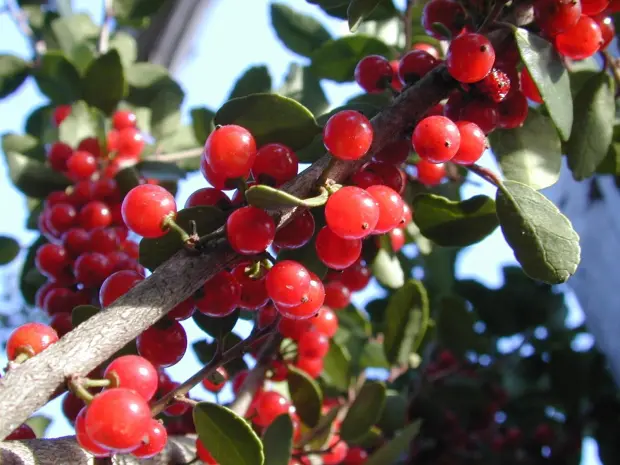
This month, you’ve likely encountered holly in various festive forms, whether in wreaths, holiday decorations, or even on greeting cards. But have you considered adding these charming plants to your garden?
With a rich variety of species and hybrids originating from places like China, Japan, South America, Europe, and North Africa, there are hundreds of holly types—more than a dozen of which are indigenous to the continental United States.
Historically, ancient pagans wove the branches of this evergreen into crowns, believing that bringing it indoors would ward off evil spirits and promote the arrival of spring. Later, early Christians adopted the plant, interpreting its evergreen characteristics as a symbol of eternal life.
While holly cannot guarantee these promises, they do enhance garden aesthetics throughout the year. Their vibrant red berries and lush green leaves echo the traditional colors of the festive season. Moreover, these berries provide vital sustenance for birds and other wildlife during winter, though it is important to note that they are toxic to humans.
The optimal time to plant holly is during early spring, ideally after the last hard freeze but before summer’s heat sets in. During the first year, regular watering is crucial as the plant establishes its roots in your garden.
Most holly plants are dioecious, meaning they come in male and female varieties. For the female plants to produce berries, a male must be nearby. Interestingly, one male plant can effectively pollinate up to ten female plants within a 50-foot radius.
Plant tags may not always specify the sex of dioecious plants, but their variety names can offer helpful clues. For instance, “China Girl” refers to a female plant, while “China Boy” serves as the male counterpart needed for fruit production. In contrast, “Greenleaf” is another female variety where you might need to check with nursery staff for more details.
Here are four notable holly varieties to contemplate, along with one to be cautious about:
Yaupon Holly (Ilex vomitoria)
This resilient species thrives in the southern Atlantic coast of the United States and across the Southeastern and Southwestern regions. You can opt for varieties that are dwarf, weeping, or upright to grow shrubs, trees, or neatly pruned hedges. Hardy in USDA zones 7-9, these adaptable natives can flourish in both sunny and shady spots, thriving in any soil type that is moist and well-draining.
American Holly (Ilex opaca)
Found throughout the East Coast and extending westward to Missouri and Texas, this slow-growing, pyramidal holly can attain heights of 25 to 60 feet at maturity. Commonly known as Christmas holly, these spiny-leaved plants can grow in zones 5-9, tolerating conditions from full sun to shade but requiring acidic, moist, and well-draining loamy or sandy soil.
Blue Holly (Ilex x meserveae)
Also referred to as Meserve holly, this generally well-mannered European hybrid showcases blue-green spiny leaves. It typically reaches heights of 2 to 8 feet and widths of 6 to 8 feet; certain climates may see it grow larger. Suitable for zones 5-7 (and possibly 8), these shrubby plants thrive in full sun to partial shade in moist, well-draining, acidic soil.
Winterberry Holly (Ilex verticillata)
Unlike the evergreen varieties mentioned earlier, the Winterberry holly is deciduous and sheds its leaves in the fall. However, its winter appeal is undeniable. The bare branches adorned with vibrant red-orange berries become a striking focal point in the landscape during the colder months. This slow-growing plant is native to the eastern United States and Canada, reaching heights of 3 to 8 feet. It can be planted in zones 3-9, surviving in varied light conditions and well-draining, moist, acidic soil.
English Holly (Ilex aquifolium)
This native of Europe, Western Asia, and North Africa is becoming invasive in certain areas, ranging from Vancouver to the Pacific Northwest and into California. Ironically, the very traits that made it a favored landscape choice when introduced to the U.S. in the 1800s—its hardiness, longevity, evergreen characteristics, and rapid spread—have now led to its classification as an invasive species. It is advisable to avoid planting this species in problematic areas and to exercise caution in others.