
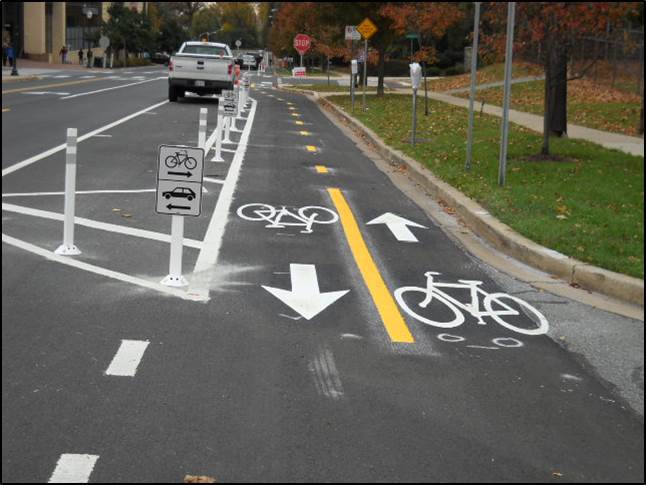
The latest biennial report highlights an average commuting duration of 33 minutes, the addition of 17 miles of new bicycle infrastructure, and the installation of over 200 prohibition signs for Right Turn on Red in urban centers.
Wheaton, Md. – The Montgomery County Planning Department, which operates under The Maryland-National Capital Park and Planning Commission, unveiled the 2025 Travel Monitoring Report during a meeting with the Montgomery County Planning Board on December 4. This biennial report assesses how effectively the county is achieving its transportation objectives outlined in Thrive Montgomery 2050, as well as functional plans like the Bicycle Master Plan and the Pedestrian Master Plan.
“The findings from the 2025 Travel Monitoring Report reveal that residents of Montgomery County are increasingly adopting sustainable and community-focused modes of transportation,” noted Jason Sartori, the Director of Montgomery Planning. “As the county persists in enhancing walking, cycling, and public transit infrastructures, while implementing safety policies for all road users, we are not only improving transportation but also fostering equity, public health, and environmental resilience.”
This report synthesizes the Planning Department’s transportation monitoring initiatives. This year’s edition taps into new datasets and analytical tools to help the county shape a more balanced, accessible, and secure transportation framework. The report also serves as a cornerstone for recommendations to confront emerging challenges since the approval of various master plans, offering guidance for future endeavors.
Data were meticulously gathered and analyzed from multiple sources, including the Maryland State Highway Administration, INRIX Probe Data Suite, the regional travel survey conducted by the Metropolitan Washington Council of Governments, and the Department’s own Multimodal Geographic Information Systems database. The data spans from December 31, 2022, to December 31, 2024, wherever applicable.
Highlights from the 2025 Travel Monitoring Report:
Travel & Commuting Trends
- In 2023, there was a renewed interest in automobile travel, with residents averaging 6,901 miles each. This marks a recovery from the low of 6,172 miles per person recorded in 2020; however, it still remains beneath the pre-pandemic peak of 7,493 miles per person in 2019.
- The proportion of individuals working remotely in 2023 was nearly 20% greater compared to 2019, prior to the COVID-19 pandemic. Additionally, there was an 11% increase in the number of commuters using alternative transportation methods instead of driving alone during this same period.
- The average one-way commute time in 2023 was 33 minutes across all modes of transportation, which includes driving, carpooling, and public transit. This reflects a slight reduction from an average of 35 minutes in 2019. Notably, public transit delays via bus continue to surpass those of cars by approximately 16 minutes, reaching an average of 49 minutes for bus commutes in 2023.
Bicycle Trends & Survey Insights
- Between 2022 and 2024, over 17 miles of bicycle facilities were either completed or were in the process of construction. This included various projects such as sidepaths, separate bike lanes (like those on Old Georgetown Road), off-street trails (predominantly the Capital Crescent Trail), and neighborhood connectors.
- According to the 2024 Pedestrian and Bicycle Survey results, many residents are uncomfortable walking, rolling, or cycling in their neighborhoods. Concerns were expressed regarding vehicle speeds along roads (42%), drivers failing to yield to pedestrians in crosswalks (32%), and vehicles cutting across sidewalks while pedestrians were present (42%). Cyclists highlighted their top issues as vehicle speed on bike routes (53%), the proximity of cars to cyclists on busy streets (48%), and inadequate quality of bikeways (48%). This survey took place between October and November 2024 and attracted 1,244 respondents.
Pedestrian Safety & Comfort Trends
- By September 2025, more than 200 Right Turn on Red prohibition signs were installed in densely populated downtown areas, such as Bethesda, Friendship Heights, Silver Spring, and Wheaton, as well as town centers in Germantown, Glenmont, Twinbrook, and White Flint. Furthermore, Leading Pedestrian Intervals were introduced at County-controlled intersections in Downtowns and Town Centers to allow residents to start crossing an intersection at least three seconds before the signal changes for cars.
- A recent analysis of existing conditions from December 2024 revealed that 63% of pathways, including sidewalks and trails, offer a pleasant experience for pedestrians. This represents a 2% increase from December 2022. Notably, locations where residents cross roads received a comfort rating of 23% in 2023, a slight rise from 22% in 2022. The Pedestrian Level of Comfort methodology utilized for this analysis takes into account factors such as traffic speed, lane count, and the presence of buffers between pathways and roadways.
- In 2024, there were 65 instances of pedestrians being severely injured or fatally struck by vehicles, marking a decrease from 84 incidents in 2022.
The report is crafted by the Travel Forecasting and Travel Monitoring Group within the Transportation Planning Division of Montgomery Planning. This team is focused on offering technical support for planning initiatives across various scales, including countywide functional plans, area master plans, and development reviews. Their responsibilities encompass travel demand forecasting and performance metric monitoring as defined by Montgomery Planning.