
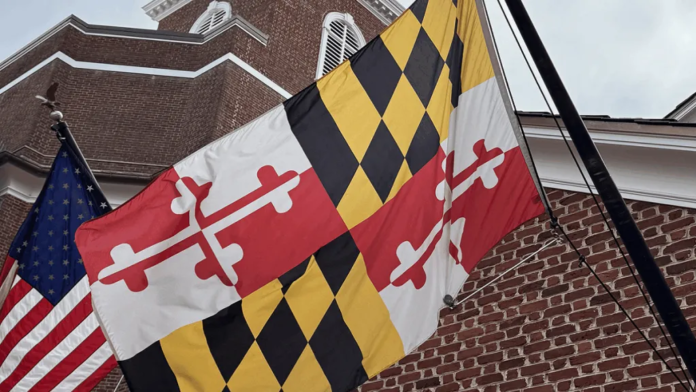
Marylanders are celebrating the history and symbolism behind the state’s distinctive flag, a design that blends the Calvert and Crossland family coats of arms. The annual observance highlights how the flag became one of the most recognizable symbols of Maryland identity
On Monday, Maryland will mark the 122nd anniversary of its state flag, a moment that comes amidst a backdrop of political discourse surrounding its symbolism.
For many residents, the Maryland flag is seen as a vital element of their cultural identity. Described by the Maryland Secretary of State’s website, its “vibrant colors, captivating patterns, and authentic heraldry” make it undeniably synonymous with the state of Maryland.
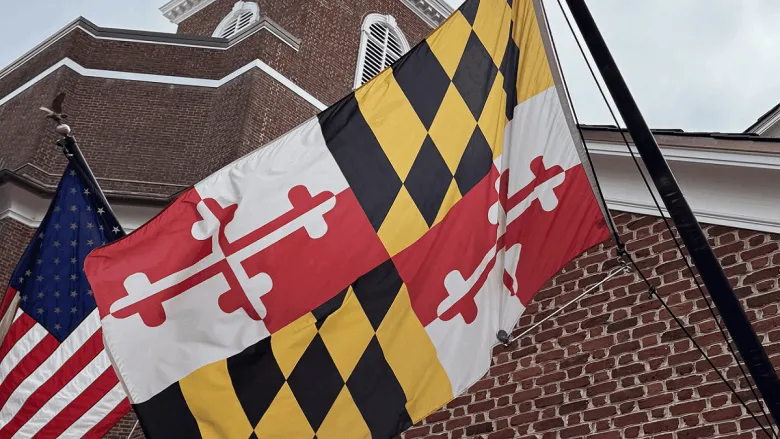
However, opinions diverge among lawmakers and historians regarding the flag’s symbolic significance. Experts have noted that its intricate history has spurred varied interpretations, leading to debates in the political sphere.
“It’s a story that is both unique and nuanced,” explained David Armenti, vice president of education and engagement at the Maryland Center of History and Culture. “It’s complex, and it resonates differently with different individuals. Importantly, it serves as an entry point for deeper understanding.”
Zachary Gardiner, a vexillologist who specializes in flags, has taken the initiative to delve into this matter. He has examined over 50 primary sources to trace the origins of the Maryland state flag back to the state itself.
According to Gardiner’s findings, Cecil Calvert, the founder and first governor of Maryland, crafted the Great Seal of Maryland to symbolize the state. This seal, as per his research, drew inspiration from heraldic traditions, with the term heraldry described by The Heraldry Society as “the organized use of hereditary devices focused around a shield.”
Calvert created this pattern by blending the black-and-gold emblem of his father with the red-and-white insignia of his grandmother’s family, as detailed on the Secretary of State’s website.
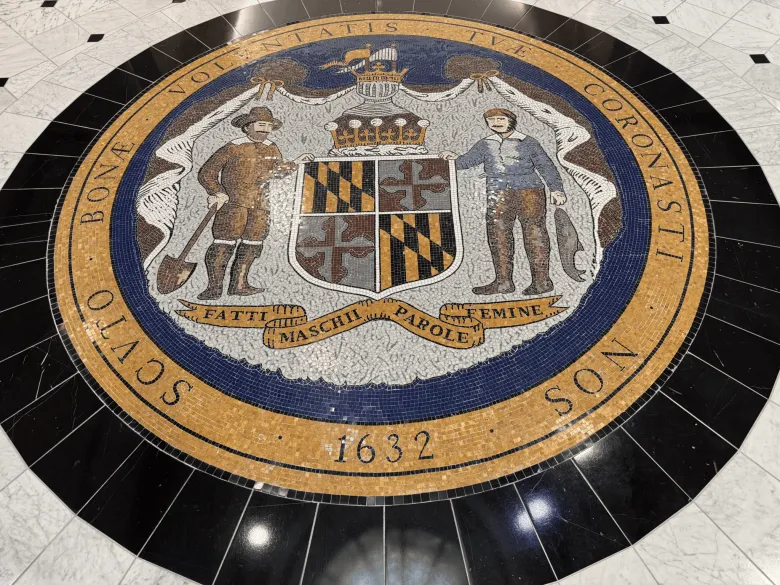
The flag, which borrows its designs from this seal, drew attention when Maryland Governor Wes Moore referred to it as a “contradiction” during a January 29 podcast for The Press Box.
As Maryland’s first Black governor, Moore noted that the flag embodies “both a Confederate symbol and a Union symbol.”
“Maryland is the northernmost Southern state,” Moore remarked. “The bloodiest battles of the Civil War erupted here. Yet, I stand as the governor of that very state.”
This characterization sparked criticism from some lawmakers, including Senate Minority Leader Stephen Hershey Jr., R-Queen Anne’s.
“Calling the Maryland flag a contradiction is not only inappropriate but also deeply hurtful to those Marylanders who take pride in this symbol,” Hershey expressed during a press conference in February.
Moore’s remarks ignited conversations on social media, stirring debates about the possibility of altering the flag. Nevertheless, the governor clarified he was not advocating for a change and even reassured residents via X on February 5 that he supports the existing flag.
In a poll released on the same day by the Baltimore Sun, an overwhelming 96.4% of the 5,114 surveyed opposed the idea of changing the state’s flag.
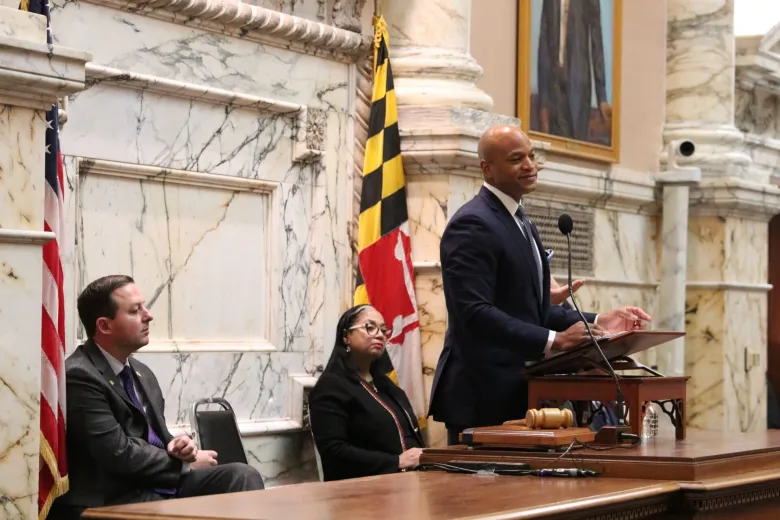
During his State of the State address on February 11, Governor Moore reiterated his affection for the flag.
“I love this flag; it is not changing,” Moore stated emphatically. “We boast the best flag in the nation, as it holds a unique symbolic significance. This flag represents a fusion of two contrasting ideas, thus it’s a contradiction, but that’s precisely what makes it special.”
The Secretary of State’s website also indicates that “the yellow-and-black Calvert arms and the red-and-white pattern of the Crossland arms … reflect the opposing factions during the conflict.”
However, Gardiner asserts that much of the commonly held beliefs regarding the Maryland flag’s divisions during the Civil War period are overstated. He argues that the idea of the black-and-yellow and red-and-white segments separating and then reuniting is largely exaggerated.
“In truth, they have always been united as they represent Cecil Calvert’s coat of arms,” Gardiner remarked. “Ultimately, I found no substantial evidence linking the red-and-white colors specifically to any secessionist symbolism in Maryland as related to the Crossland arms. Their significance has always been tied to what some term the secession banner.”
Despite the ongoing debates concerning its historical meaning and symbolism, the cultural impact of the state flag remains significant for numerous Marylanders, according to experts.
“We must also acknowledge that the Maryland flag serves as a source of pride for many citizens of diverse races, ethnicities, and beliefs,” noted Martina Kado, vice president of research and France-Merrick director of the H. Furlong Baldwin Library at the Maryland Center of History and Culture. “Marylanders are accustomed to complexity being woven into their state’s identity.”