

Emotional moments unfolded this week for Shari Bailey when a lawmaker reached out with the hopeful news that her inspired legislation aimed at protecting individuals with autism or dementia had successfully passed through the House. The bill seeks to significantly enhance the safety and resources available for individuals who may wander off, a situation often referred to as “elopement.”
This development represents just one of several positive strides Bailey has witnessed regarding a comprehensive set of bills she’s advocating for, all focused on addressing the pressing issue of elopement.
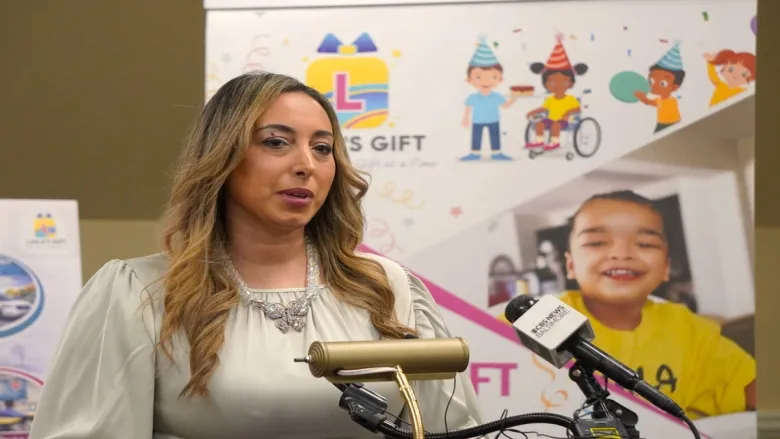
This past Wednesday, the House voted unanimously in favor of House Bill 634, a measure that mandates police training tailored to elopement scenarios, a training protocol not consistently standardized across the state. Just one week prior, the Senate also granted unanimous approval to its corresponding measure, Senate Bill 745, setting both proposals on a promising path toward final legislative approval.
Following the House’s decision, Bailey, a resident of Harford County, expressed her heartfelt gratitude, stating she felt “overwhelmed, in a good way.”
The duo of bills sits at the forefront of a broader ensemble of five legislative initiatives referred to as the LEAD Act — Laila’s Elopement Awareness and Dissemination Act. This act is named in honor of Bailey’s daughter, Laila, who once had a distressing experience where she wandered off but was fortunately located unharmed. This shared fear of wandering is a significant concern for numerous families caring for loved ones with disabilities.
The entire legislative package is designed to transform how educational institutions, health insurance providers, and state agencies address the issue of elopement. The two principal bills, House Bill 634 and Senate Bill 745, focus on police training to handle elopement situations effectively.
On the same day, the House also endorsed House Bill 1182, which proposes allowing parents of autistic children and those with other disabilities to use tracking devices in coordination with their child’s school. This initiative aims to enhance the ability of school staff to locate students in the event of elopement.
Delegate Aaron M. Kaufman (D-Montgomery) expressed his delight in supporting the legislation, emphasizing its potential to “save lives and put the minds of parents at ease.” While this bill currently lacks a Senate counterpart, it still must clear a Senate committee before it can progress to a full Senate vote.
This legislative session marks the inaugural year for the suite of elopement bills, and their relatively swift progression is noteworthy in Annapolis, where lawmakers are generally more cautious with fresh proposals. Bailey is optimistic about the advancing of the primary bills and hopes the remaining legislation in the package experiences similar success as the session approaches its conclusion.
“This is such a significant step for Maryland… It’s going to impact so many lives,” Bailey remarked.
According to the Centers for Disease Control and Prevention, approximately 1 in 31 children aged 8 years has autism. Reports from various autism-focused organizations indicate that roughly 45% to 50% of children with autism tend to wander away from safe settings without adult supervision.
It is crucial to note that the risks associated with elopement also extend to individuals with dementia, who can become disoriented and leave unexpectedly. Other developmental disabilities may result in similar tendencies as well.
Shari Bailey’s dedication to this cause was fueled by a harrowing incident in 2020, when her then-6-year-old daughter Laila went missing for a brief period while under a caregiver’s watch. Thankfully, Laila was located safely, yet the anxiety stemming from that experience motivated Bailey to collaborate with Maryland lawmakers to enhance resources available to families encountering similar challenges.
Despite notable progress, not all pieces of the LEAD Act are moving forward seamlessly. Challenges arise particularly with bills that come with significant financial implications that require careful justification.
This extends to House Bill 1117, which seeks to compel Maryland Medicaid and other state programs to cover monitoring devices by designating them as “medical equipment” for individuals at risk of elopement.
Covering these elopement response devices would necessitate funding for the devices themselves as well as a monthly service fee, which averages around $848 per individual annually. While federal matching funds might offset some of these costs, the current tight budget means every dollar is under scrutiny. So far, this bill has not been voted on in committee.
Advocates have expressed concerns that difficult decisions regarding budget allocations will be necessary, even if lawmakers acknowledge the legislation’s importance.
“Tough choices will need to be made this session, without a doubt,” said Melissa Rosenberg, executive director of the Autism Society Maryland. “We hope legislators can find a solution, but many of the desired initiatives come with significant costs. The state will need to prioritize.”
Two additional bills are progressing, but the pace of their movement remains uncertain. One focuses on expanding mandated school mapping to encompass a mile radius within school grounds, taking into account bodies of water — as the majority of drowning incidents involving wandering autistic children occur around such areas. It awaits a final vote in the House, anticipated soon. A corresponding Senate version is not currently available.
The other bill mandates the health department to develop a webpage featuring resources for family caregivers managing individuals due to age, disability, chronic illness, or other challenges, including guidance on safety for wandering and elopement. This bill received approval from the House Health Committee on Friday and is now positioned for a full House vote, though it lacks a Senate counterpart as well.
As deadlines approach for legislative movement, advocates remain hopeful that the pressing issues surrounding elopement can be effectively addressed. Bailey emphasizes that raising awareness about elopement remains an invaluable aspect of this advocacy, having personally witnessed increased understanding surrounding the topic through her testimonies this session.
“I’ve received feedback like, ‘I had no idea what elopement was until I came across your bills,’” she shared. “Education has proven to be an essential part of this journey.”