
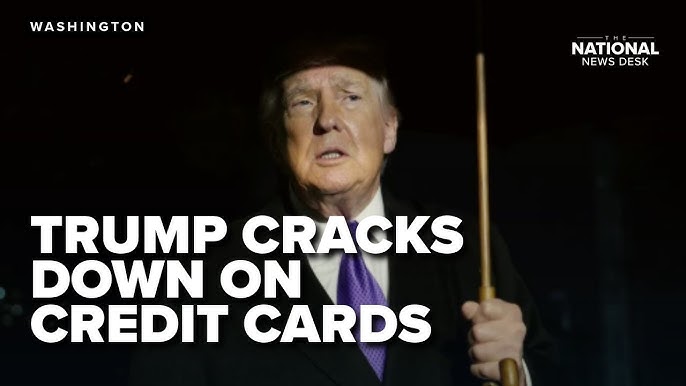
Faced with growing pressure to respond to voter concerns about the cost of living, Trump proposed a one-year limit on credit card interest rates at 10%, beginning January 20. However, he did not clarify how this proposal would be implemented, leading some experts to suggest that it would likely necessitate legislative action from Congress.
Financial groups were caught off guard by the announcement and swiftly prepared their counterarguments on Monday. The Electronic Payments Coalition, which advocates for financial institutions and payment card networks, stated that nearly every credit card account with a credit score below 740 — accounting for 82% to 88% of all open accounts — would either be closed or heavily restricted if a cap of 10% were to be enforced.
“Although a uniform governmental price cap may sound appealing, it would do more harm than good for Americans — actually restricting families’ opportunities and undermining our economy,” claimed Richard Hunt, Executive Chairman of EPC.
Experts noted that while those with subprime credit scores might bear the brunt of the negative impact, imposing such a cap would also result in higher annual fees for the majority of borrowers. Additionally, they argued that it would reduce rewards on credit cards and lead to an increase in monthly account charges. Some voiced concerns that the cap could slow down consumer spending, ultimately hindering economic growth.
Credit cards play a crucial role in the U.S. consumer finance landscape, providing households with flexible credit options, albeit often at high-interest rates. For banks and card issuers, these elevated rates and associated fees generate significant profit margins.
Data from the Consumer Financial Protection Bureau shows that by 2024, average APRs reached their highest levels since 2015, with most of the increase attributed to a rising prime rate: 25.2% for general-purpose cards and 31.3% for private-label cards. Additionally, it was reported that the proportion of cardholders making only minimum payments in 2024 hit its highest rate since 2015.
Industry sources suggest that the proposed cap could lead to a sharp reduction in lending, as it would render credit cards unprofitable.
Michael Miller, a Morningstar analyst, remarked, “President Trump’s statement appeared more like a rallying cry and didn’t entail specific policy or legislative details.”
“While we believe the cap is unlikely to materialize, should it be enforced, it would likely have severe repercussions for the profitability of credit cards. Many credit card portfolios would face costs that are too high to sustain under a 10% constraint,” he added.
Research has also indicated that capping credit card interest rates might save consumers a substantial amount of money. A study conducted by the Vanderbilt Policy Accelerator, an institute at Vanderbilt University, released in September, suggested that a 10% cap could save American consumers around $100 billion each year. However, it also noted that such a cap could reduce credit card rewards for borrowers with credit scores of 760 or below.
“We frequently encounter apprehensions that this would lead banks to close customers’ credit card accounts,” explained Brian Shearer, director of competition and regulatory policy at the Vanderbilt Policy Accelerator. “What we discovered is that profit margins are incredibly lucrative, suggesting there is some excess that could be trimmed.”
Hannah Lang and Douglas Gillison report for Reuters.