
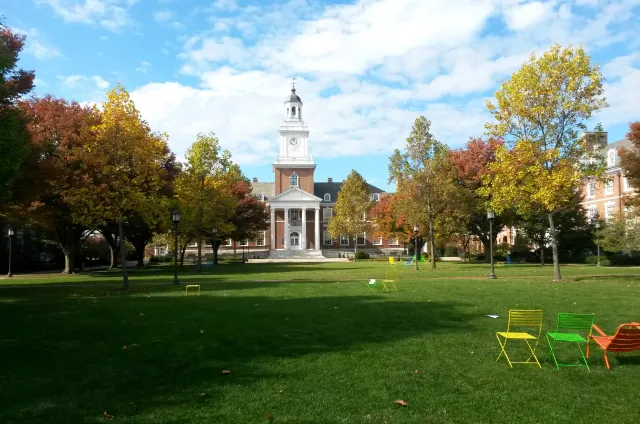
This month marks a significant milestone for Johns Hopkins University, as it celebrates its 150th anniversary. The institution will kick off a year filled with engaging events, retrospectives, and thoughtful discussions.
Join the festivities for the Birthday Kickoff and Ice Rink Closing Day on Sunday, February 22, at 2 p.m. This celebration is free to attend, but registration is necessary.
While Johns Hopkins is widely recognized for its research initiatives and prestigious medical school, many may be surprised to learn that it was the birthplace of groundbreaking inventions like the rubber glove and GPS. These innovations have become integral to modern life, yet few know they originated at this esteemed university. Let’s explore some history first.
HISTORY
Johns Hopkins University opened its doors in 1876 under the leadership of Daniel Coit Gilman, its first president. The university was named after 19th-century Maryland philanthropist Johns Hopkins, whose dedication to public health and education, both locally and globally, shaped the institution’s mission to achieve excellence in research and academics.
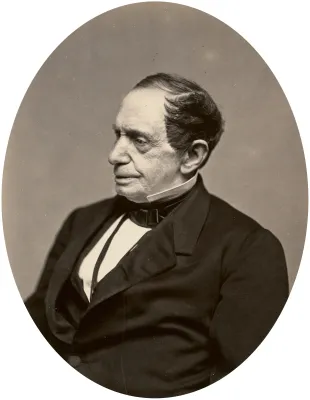
Johns Hopkins came from a large family of 11 siblings and achieved wealth through business ventures, including investments in the Baltimore and Ohio Railroad. Historical accounts paint him as an early abolitionist, yet recent research has uncovered that he did indeed enslave people until the mid-1800s. An examination of census records has challenged earlier narratives about his legacy.
In his will, Hopkins bequeathed $7 million, which was then the largest charitable donation in U.S. history, intended to establish a hospital, training colleges, an orphanage, and a new university. At Gilman’s inaugural address at the university’s opening, he articulated a mission that still resonates today: “To educate its students and foster their capacity for lifelong learning, promote independent and original research, and share the benefits of discovery globally.”
THE RUBBER GLOVE
Although it seems unimaginable for a surgeon to operate without rubber gloves, the original intention behind their invention was quite different—it was aimed at protecting the hands of the hospital staff.
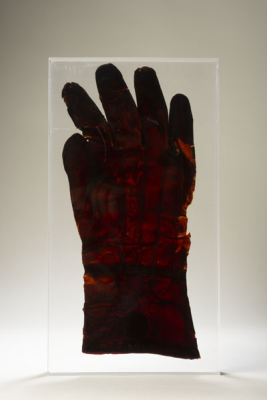
In 1890, William Stewart Halsted, the hospital’s first surgeon-in-chief and one of its founding physicians, commissioned the Goodyear Rubber Company to create thin rubber gloves for his nurse and future wife, Caroline Hampton. His goal was to shield her hands from the harsh disinfectants used in operating rooms. Soon, other hospital staff members began wearing them for the same reason, leading to a notable reduction in patient infections. Today, gloves can be made from materials like latex or vinyl, but their use in surgery and patient procedures is mandatory.
Historical/Cultural Note: Viewers of the Netflix documentary “Death By Lightning” might recall the unsettling scenes where President Garfield’s attending physician, Willard Bliss, probes Garfield’s bullet wound with his bare finger, disregarding the emerging concept of germs and sterility. Dr. Charles Purvis, the first Black doctor to assist a sitting U.S. president, raised concerns about the dangers of unsterile practices but was ignored, leading to Garfield’s death from sepsis, not the gunshot wounds. This occurred in 1881, prior to Halsted’s introduction of gloves.
GPS
In 1957, researchers at the Johns Hopkins Applied Physics Laboratory (APL) contributed significantly to the development of technology that eventually became the Global Positioning System (GPS) we rely on today. This was thoroughly detailed by Robert L. Henderson, William S. Devereux, and Thomas Thompson in the “Johns Hopkins APL Technical Digest” in 2010.
The groundwork for GPS was established during World War II when APL devised a method to utilize Doppler measurements to time artillery shell detonations. A decade later, during the Cold War, APL assisted the U.S. Navy in tracking the orbit of the Soviet satellite Sputnik using the same Doppler technology.
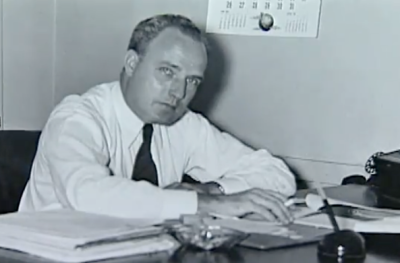
Frank McClure, an employee at APL, recognized the potential to reverse the process and use satellites to locate a ground receiver. This innovation paved the way for the Navy’s Transit navigation system, the precursor to modern GPS. In the late ’60s and ’70s, APL participated in studies assessing navigation signal alternatives and constellations.
“While not directly involved in the development of the GPS space segment, APL has played a crucial role in vital advancements within the GPS user segment from the onset,” the authors noted. “In fact, a Navy system designed by APL was the first committed user of GPS.”
Historical/Cultural Note: Gladys West, an unsung hero in the development of GPS technology, was a mathematician whose vital work went largely unrecognized during her career because she was a Black woman. She has since been acknowledged as one of the “hidden figures” behind GPS. The story of her contributions was popularized in the book and film “Hidden Figures,” which highlights the significant roles of African-American women who were pivotal in NASA’s success during the 1960s. In her later years, West received numerous awards, including the prestigious Prince Philip Medal, presented by the Royal Academy of Engineering in the U.K. The U.S. Space Force has acknowledged that modern GPS would not exist without her contributions.
THE DEFIBRILLATOR AND CPR
The 1950s were a transformative decade for Johns Hopkins researchers, resulting in the development of both the first cardiac defibrillator and the method for manual cardiopulmonary resuscitation (CPR) in 1957 and 1958.
William B. Kouwenhoven joined Hopkins in 1914 to teach in the then-Department of Electrical Engineering. Although he wasn’t a medical doctor, he had a keen interest in exploring the effects of electricity on the human body and its intersection with medicine. His mission was to save lives through electrical interventions.
In 1925, the New York gas and electric company Con Edison commissioned the Johns Hopkins School of Hygiene and Public Health to investigate why utility workers, even those experiencing minor shocks, often collapsed from ventricular fibrillation (VF). VF disrupts the heart’s rhythm and can lead to a cessation of blood circulation. Kouwenhoven joined the research team for this project.
During experiments on a dog’s heart in 1933, the team discovered that delivering a second electrical shock (which Kouwenhoven termed a “countershock”) could reset the heart’s normal rhythm. This groundbreaking method, known as defibrillation, was first applied to a human patient during open-chest cardiac resuscitation in 1947. However, Kouwenhoven recognized that open-chest surgery would not be a feasible option for emergency situations, such as when a lineman experienced VF.
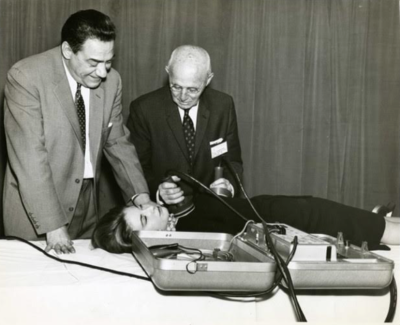
In 1951, with a grant from the Edison Electric Institute, the Department of Surgery at Hopkins launched Kouwenhoven’s research to create a portable and effective closed-chest defibrillator. Six years later, after rigorous animal testing, the Hopkins A-C Closed Chest Defibrillator was introduced. Weighing 200 pounds and mounted on a cart, it was first used successfully on March 17, 1957, to revive a 42-year-old man whose heart had stopped beating.
In their quest for more advanced life-saving techniques, Kouwenhoven’s team observed that applying defibrillator paddles on a dog’s chest improved blood pressure. Their experimentation led them to formulate a combination of techniques known as “closed chest cardiac massage” paired with “artificial respiration,” which they branded as cardiopulmonary resuscitation (CPR). Between 1959 and 1960, 20 cardiac arrest patients at Hopkins were treated with CPR, all of whom were successfully revived.
Kouwenhoven expressed his joy, stating, “This was the breakthrough we were looking for.”
Historical/Cultural Note: Contrary to popular belief, CPR does not require mouth-to-mouth ventilation. A more effective hands-only technique focuses on chest compressions combined with calling emergency services. The American Medical Association (AMA), established in 1847, emphasizes the need for increased awareness and training in CPR, noting that many individuals lack formal education on the subject. Fortunately, awareness is improving, and the AMA offers extensive free resources on its website.
THE LIST GOES ON…
The impact of Johns Hopkins University’s discoveries on the daily lives of residents in Baltimore, Maryland, and beyond is immense. For example, in 1919, Abel Wolman, a Hopkins graduate, discovered a method to purify drinking water using chlorine, a practice subsequently adopted in cities nationwide. In 1967, APL captured the first color photograph of the Earth from space. Additionally, in the 1970s, a woman at Hopkins identified alarming rates of infant fatalities in car accidents, which played a pivotal role in establishing child safety restraint laws in the U.S.
While only a select few may navigate spacecraft to land on asteroids (as was achieved in 2001), countless individuals have benefited from Johns Hopkins’ Coronavirus Resource Center during the COVID-19 pandemic with its well-known tracking map. How many people have found hope through advances in immunotherapy and mRNA treatments (2024) that are significantly transforming cancer treatment? Would any of these advancements be possible without Henrietta Lacks?
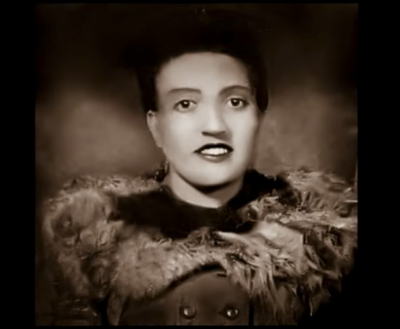
Henrietta Lacks was a woman from Baltimore County who tragically fought cervical cancer in the 1950s. At that time, Johns Hopkins was one of the few hospitals that treated Black patients. Although her treatment was unsuccessful, and she passed away in October 1951, without her consent, specific samples from her cancerous cells were taken by researchers at Johns Hopkins Hospital. Remarkably, they discovered her cells had an extraordinary ability to multiply indefinitely, rendering them effectively immortal. For many years, her HeLa cells were used in research without permission or compensation to her family.
In recent years, numerous scientific and medical organizations have collaborated with the Lacks family to atone for this misconduct, including Hopkins, which did not profit from HeLa cells but supported research efforts involving them. In October 2024, the university and hospital honored Lacks’s legacy by hosting descendants at the groundbreaking ceremony for a building dedicated to her memory.
The upcoming Henrietta Lacks Building in East Baltimore will host the Berman Institute of Bioethics and various programs from both Johns Hopkins University and its School of Medicine.
Explore more about the groundbreaking research milestones at Hopkins as the institution celebrates its 150th anniversary.