
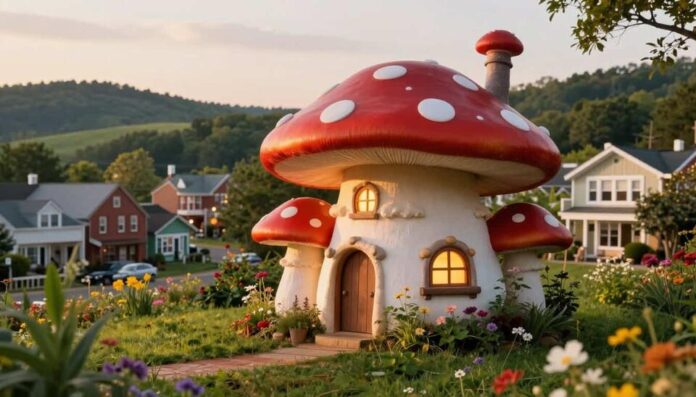
In the heart of Bethesda, one home stands out from the typical suburban landscape. This unique residence, known as the Mushroom House, was transformed in the late 1960s into a striking architectural marvel that continues to captivate visitors.
Recognized as a notable attraction for those interested in distinctive homes, the Mushroom House has become a local icon. It exemplifies the whimsical architecture that Maryland is known for, drawing curious onlookers eager to learn about its history and design.
For anyone intrigued by quirky architecture or looking for an enjoyable outing, the Mushroom House is a must-see. This article explores its fascinating past, how to visit, and nearby attractions that make for a delightful day trip.
Discovering the Mushroom House
Entering the vicinity of the Mushroom House feels like stepping into a fairy tale. Nestled in a serene part of Bethesda, its unusual shape immediately captures attention.
As a private residence, visitors are reminded to admire the house from a distance while respecting the owners’ privacy.
A Glimpse into Its History
Originally a conventional suburban home, the Mushroom House underwent a remarkable transformation that has since made it one of the most unusual houses in Maryland. Its flowing, organic design sets it apart from typical structures.
Affectionately referred to as the Tolkien House, it has become a cherished landmark in the community.
Location and Getting There
Situated in the bustling area of Bethesda, the house is easily accessible due to its proximity to major roads. However, parking can be limited, so it’s advisable to visit during daylight hours to avoid disrupting the residential neighborhood.
Interesting Features of the House
The Mushroom House is renowned for its smooth curves, reminiscent of a mushroom, making it a standout among Maryland’s unique homes. Photography enthusiasts often flock to capture its enchanting light effects, making it a memorable sight for all.
Architectural Highlights
As you approach this remarkable structure, the distinctive architecture that Maryland is famous for becomes evident. The building departs from conventional shapes, embracing a fluid and organic aesthetic that showcases the potential of imaginative home design.
Design Elements
The exterior features soft, flowing shapes and whimsical details, with rounded openings that create a welcoming atmosphere. Its cartoon-like windows are particularly striking, resembling the eyes of a woodland creature.
Inside, the creativity continues with a dramatic 30-foot ceiling that enhances the spacious feel. A cozy curved fireplace, clever skylights, and an open loft overlooking the main area add to its charm.
Construction Materials
To achieve such a unique design, the builders employed innovative techniques, using wire mesh and polyurethane foam to create the home’s distinctive curves. A thick layer of shotcrete was applied to ensure the structure’s strength and weather resistance while maintaining its artistic appearance. This unconventional approach exemplifies the creativity found in Maryland’s architecture today.
The Story Behind Its Creation
The Mushroom House began as a typical home project but evolved into an ambitious experiment that challenged conventional architectural norms in Maryland.
Design Inspiration
Inspired by nature’s organic forms and the futuristic design trends of the late 1960s, the creators sought to break away from traditional boxy homes. They envisioned a structure that harmonized with its natural surroundings.
“Architecture should speak of its time and place, but yearn for timelessness.”
This vision reflects the commitment to unique architecture that many appreciate today, showcasing the power of innovative thinking.
The Visionaries Behind the House
Edward and Frances Garfinkle commissioned architect Roy Mason to bring their dream to life. As construction progressed, the project proved to be more complex and costly than anticipated, transforming into a labor of love that pushed the boundaries of home design.
Despite the challenges, the Garfinkles remained dedicated to their vision, ensuring that this unique architectural gem would be enjoyed and studied by future generations.
What to Expect When Visiting
The Mushroom House is a top destination for those exploring Maryland’s landmarks. However, it differs from typical tourist attractions, as it is a private home without set visiting hours or admission fees.
Visitation Guidelines
As a private residence, the Mushroom House does not offer public tours, and visitors are encouraged to admire it from outside. Respecting the owners’ privacy is essential, so it is important to avoid trespassing or intruding on their space.
Nearby Activities
The area surrounding the Mushroom House is rich in history and natural beauty, making it an excellent spot for exploration. Visitors should check local resources for information on nearby attractions and trail conditions.
Attractions in the Vicinity
Visitors to the Potomac and Bethesda area will find plenty to enjoy, including:
- Great Falls Park: Witness the stunning waterfalls of the Potomac River.
- Glenstone Museum: A serene venue showcasing modern art.
- Cabin John Regional Park: A family-friendly park featuring trails and a miniature train.
“The beauty of Maryland lies in its ability to blend quiet, natural retreats with vibrant, artistic communities.”
Dining Options Nearby
After a day of exploration, visitors can find a variety of dining options in Bethesda and Potomac, ranging from casual eateries to fine dining. Local bistros offer fresh, seasonal fare, making it easy to find a meal after visiting the Mushroom House.
Keep in mind that weekends can be busy in this area, so it’s wise to make reservations to avoid long waits.
Seasonal Events and Community Engagement
While the Mushroom House is a private residence and not a venue for events, it remains an important part of Bethesda’s cultural landscape. It is frequently featured in architectural guides and is a source of pride for local residents.
Community Impact
The house serves as a cultural landmark, inspiring creativity and conversation among locals. Though it does not host events or workshops, its presence contributes to the community’s identity and charm.
Visiting Tips
For those planning to see the Mushroom House, it’s essential to be respectful and mindful of the private nature of the property. Consider how this visit fits into your broader exploration of Maryland’s unique sites.
Best Times for Photography
For optimal photography, visit during the early morning or late afternoon when the light is soft. Weekdays are preferable to avoid crowds, allowing for a more relaxed experience.
What to Bring
Bring a camera or smartphone for photos, and wear comfortable shoes for walking. A digital map or printed guide can help navigate the area, while remaining on public paths is crucial to respecting the neighborhood.
By following these guidelines, you can enjoy one of Maryland’s most unusual homes while contributing to its preservation as a local treasure.
Conclusion: A Hidden Gem in Maryland
The Mushroom House is a remarkable example of creative architecture that leaves a lasting impression. Its transformation in the late 1960s resulted in a whimsical exterior that continues to inspire awe.
Why It Matters
This unique house is a testament to the artistic spirit of local architecture. Viewing it with respect for the owners and their property is essential. Including it in your travel itinerary allows you to experience one of Maryland’s most eccentric landmarks.
Exploring the Region Further
Consider visiting other Maryland landmarks that offer intrigue and history. The area around Bethesda and Potomac is rich with opportunities for exploration, and Washington, DC, is just a short drive away, providing even more chances to discover the region’s hidden character.