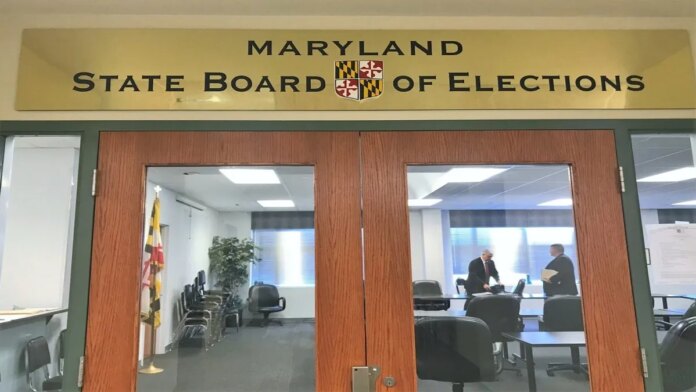
On January 12, 2026, the Maryland State Board of Elections unveiled its newly upgraded Maryland Campaign Reporting Information System (MD-CRIS) and the Business Contribution Disclosure System (BCDS) in Annapolis. This modernization aims to enhance transparency, ensure data accuracy, and improve public access to critical campaign finance information. The initiative focuses on helping candidates, committees, and businesses fulfill their reporting obligations under state law, enabling voters to gain real-time insights into the financial transactions that impact elections.
State Administrator Jared DeMarinis highlighted that this upgrade marks a significant advancement in reinforcing Maryland’s framework of transparency, accountability, and efficient management of campaign finances. The initiative responds to the pressing need for secure election processes in light of growing public scrutiny regarding the sources of political funding.
The new platforms provide improved reporting capabilities for various entities participating in Maryland elections, including local committees in Southern Maryland counties like Charles, Calvert, and St. Mary’s. Candidates running for county commissioner, school board, and more are required to submit disclosures. The systems simplify the process with guided data entry and automated calculations, which help to minimize errors and reduce the manual workload for filers. Previously, these individuals had to rely on outdated technology that often resulted in incomplete submissions. Public users now benefit from expedited searches through an enhanced analytical database, making it easier for residents to track contributions, expenditures, and business disclosures quickly. This accessibility reinforces the integrity of free and fair elections, ensuring that all filed data is available through a user-friendly portal, aligned with Maryland’s commitment to election integrity.
DeMarinis remarked, “These new systems represent a meaningful advancement in fortifying Maryland’s framework for transparency, accountability, and effective campaign finance management.” He explained, “With real-time visibility into reported data, improved accuracy, automated compliance tools, and easier public access, we are working to keep our election processes secure, modern, and centered around voters.” The enhancements include automated compliance checks and standardized notifications to lessen administrative burdens. Additionally, the backend architecture has been optimized for swift processing, featuring error files for imports. Such features simplify the filing process and offer intuitive visuals and guided steps for committee registration, greatly benefiting smaller local campaigns in rural areas like Southern Maryland that may not have extensive administrative support.
The launch of these systems comes at a critical time as Maryland gears up for the 2026 election cycle, which encompasses gubernatorial, legislative, and local races relevant to the tri-county region of Southern Maryland. State regulations mandate that campaign committees report their transactions via MD-CRIS, while businesses contributing above certain thresholds are required to disclose their activities through BCDS. The design of these systems reflects input garnered from filers and the general public to bolster efficiency and oversight, reinforcing the board’s role in administering elections across Maryland’s 23 counties and Baltimore City. In Southern Maryland, where industries such as agriculture, defense, and local businesses are economically significant, transparent reporting enables voters to scrutinize funding coming from these local industries, including those linked to Patuxent River Naval Air Station and regional development initiatives.
DeMarinis further emphasized, “Maryland’s commitment to innovation within election administration continues to bolster public confidence in our democratic processes.” He highlighted, “These platforms are crafted not just to assist campaigns and committees, but also to enhance public trust in the integrity and transparency of our elections.” The board’s initiatives build on previous improvements, such as the implementation of electronic filing requirements, aimed at managing increasing data volumes. For instance, during the 2024 election cycle, over 1,000 committees submitted reports statewide, with districts in Southern Maryland providing disclosures for school board and county council races. The new systems strive to mitigate issues like late filings, which can result in penalties per state regulations.
Residents can access the platforms at campaignfinance.maryland.gov for MD-CRIS and businessdisclosure-elections.maryland.gov for BCDS. The board also offers training seminars through its candidacy and campaign finance division. Filers are encouraged to review updated FAQs and video tutorials to ensure a smooth transition.
This modernization positions Maryland as a frontrunner in election management, particularly in areas like Southern Maryland, which are experiencing growth due to population increases and economic shifts. Local election boards in Calvert, Charles, and St. Mary’s counties stand to benefit from reduced oversight workloads, allowing them to concentrate on voter registration and polling operations in preparation for the 2026 primaries.
The enhancements provide several key benefits, such as real-time access to reported financial transactions, a public portal for comprehensive access to filed data, and more efficient searches through advanced technology. To enhance efficiency, guided data entry helps prevent incomplete filings, while automated calculations reduce the likelihood of errors. Additionally, a clear filing process streamlines the understanding of financial data. Technical advancements enable automated compliance checks, standardized notifications, self-service tools, and modern architecture for handling imports.
These improvements uphold Maryland’s longstanding election laws, which were instated to promote accountability since the early 2000s, while also meeting federal standards for disclosure coordination. In Southern Maryland, where voter turnout often surpasses state averages in local elections, these systems provide valuable tools for community organizations to monitor funding and engagement, encouraging informed participation in democratic activities.