
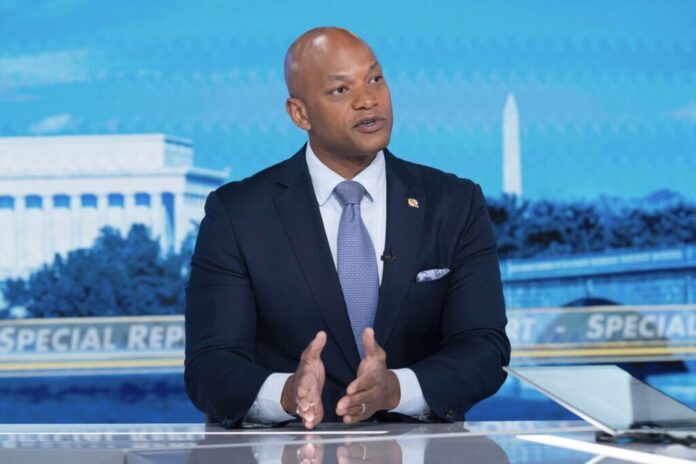
Governor Wes Moore is seeking reelection this year amid significant challenges facing Maryland, including reductions in federal funding, immigration enforcement issues, and an anticipated budget shortfall of $1.4 billion.
The opening of the final legislative session of Moore’s first term took place on Wednesday, marking an important milestone in his governorship.
The Maryland General Assembly is poised to tackle various critical issues during its 90-day session. Key topics of focus will include managing the state’s debt, the role of U.S. Immigration and Customs Enforcement, public safety measures, and improvements in education.
During a recent interview with WTOP anchors Anne Kramer and Shawn Anderson, Moore emphasized that the budget deficit would significantly influence ongoing decisions.
Maryland Governor Wes Moore discussed the priorities for his last legislative session during an interview with WTOP
“I’ll be proposing a balanced budget that actually decreases the size of the general fund compared to the previous year,” Moore stated, adding that there will be no tax or fee increases included.
He mentioned that job creation and economic growth would be supported through investments from various manufacturers and private sector companies, including Samsung Biologics and AstraZeneca.
“Our goal is to diversify our economy away from reliance on Washington, D.C. We plan to allocate resources intelligently and avoid spending on initiatives that are ineffective or unsustainable,” he explained.
While Moore did not disclose specific programs that might face funding cuts when he unveils the budget next week, he indicated there would be “substantial investments in public education” and public safety.
“You will see a clear outline of my priorities, as well as those areas we deem ineffective or unsustainable that will not receive funding,” he said.
Referring to the contract buyouts offered to hundreds of state employees last year, Moore asserted these measures were essential for creating a “more efficient and effective government.”
Some Republican legislators are closely monitoring Moore’s actions with a keen focus on affordability. During a briefing on Tuesday, minority leaders from both the House and Senate revealed plans to introduce an oversight committee to investigate audits of state agencies where financial mismanagement may have occurred.
The GOP highlighted the escalation of utility bills and other financial challenges expressed by their constituents.
“One of the bills I’m introducing aims to address the rising energy costs,” Moore noted in his discussion with WTOP. “If we are to have an impactful conversation about energy prices, I am prepared to discuss options such as solar, wind, nuclear technologies, and nuclear energy, which will provide efficient and affordable ways to enhance our energy supply.”
He pointed to the decreased teacher vacancy rate and increased funding for local law enforcement as proof of these “smart investments,” along with a notable decrease in violent crimes.
“Eighteen of the last 21 budgets in Maryland required cuts to balance, and it’s time we shift away from the mentality of investing based on formulas to investing based on tangible results,” Moore added.