
Watch a livestream of the ceremonies commemorating the 25th anniversary of the 9/11 terrorist attacks on Friday.
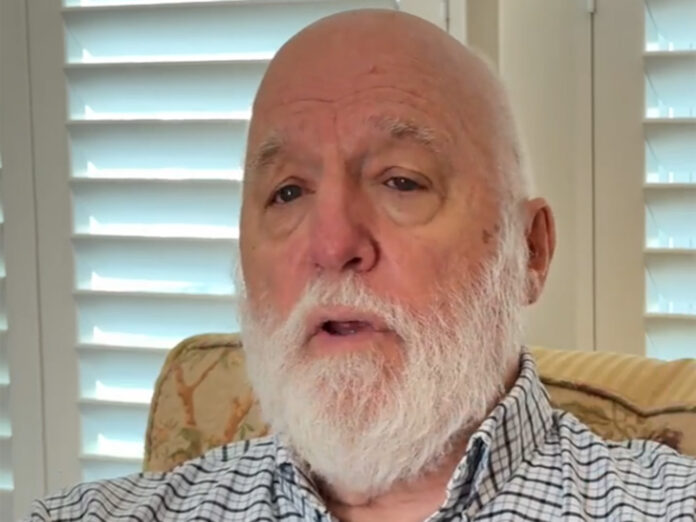
Dan Shea, who once served as principal at Quince Orchard High School in Gaithersburg, Maryland, had a strict policy when it came to observing teachers: he preferred not to be interrupted.
However, on the fateful morning of September 11, a knock on the door interrupted his observation of a French lesson. “It was my secretary,” he recalled.
Shea signaled that he was in the midst of his observation, but his secretary insisted he step into the hallway.
“A student leaned back in his chair and said, ‘You know, Shea, why don’t you go talk to her?’” he remembered.
Upon leaving the classroom, Shea learned from his secretary that a plane had crashed into a building in New York just after nine in the morning. He remarked, “I closed the door, I left the observation, and my whole day changed from there on in. Nothing was normal from that point forward.”
Navigating the Crisis
In the immediate aftermath, the Montgomery County school district’s central office initiated lockdown protocols.
“The directive was clear: stay on lockdown, no one leaves the building without permission, and so we entered that protocol,” Shea reflected.
Within a mere 40 minutes, he observed a considerable line of anxious parents forming at the school’s entrance, eager to collect their children.
Another 40 minutes passed, and Shea reported that over 100 students had been released to their families, though many more remained anxiously awaiting contact with their parents.
As news of the Pentagon attack and the evacuation of the U.S. Capitol and White House broke, the anxiety levels among students intensified.
Shea noted that many students expressed concern for their own parents who worked in downtown Washington, D.C., voicing fears because they could not get in touch with them.
In some instances, students insisted that they could not remain in their classrooms; they sought solace in the office or assistance from the nurse.
“I had additional counselors available, and I worked with the nurse to provide one-on-one time for students who needed it,” Shea explained.
As teachers and staff endeavored to soothe students, answer their questions, continue with lessons, or simply help them process the unfolding events, Shea established a phone triage system in his office.
He utilized walkie-talkies and phones outside his office, allowing children to use the desk phone directly. He described it as a way to help anxious students: “Look, here’s my chair, you can dial as many times as you need, and just sit right here. You won’t have to wait in line or in front of your friends, we can put that one student on that one phone,” until they could reach their parents or guardians.
He implemented a similar approach with the school nurse’s phone. By approximately 2:15 p.m., Shea stated that nearly all of the school’s roughly 2,000 students had been released to their families.
One heartbreaking incident involved a student whose father lost his life in the Pentagon attack, which cast a somber tone over the following day.
The next day saw an increase in absences, though Shea noted that many students seemed eager to return to their friends.
Reflections
Shea observed that “the events of 9/11 represented a significant national issue, as well as a call to prepare for emergencies.”
Even prior to September 11, Shea noted that students were already being trained on how to respond in emergencies, especially those involving school shootings.
“It’s truly unfortunate, but children today are much more knowledgeable about how to handle incidents and the immediate responses required. We must remain vigilant regarding potential threats and dangers,” Shea remarked.
He added, “I believe we are now better prepared for national emergencies.”
Editor’s note: Kate Ryan worked as a teacher at QOHS on 9/11 during Dan Shea’s tenure as principal.